Hat tip to Frederica Matthewes-Green
Life Along the Orthodox Way
and a lot of people are shouting trying to be heard. Only God seems quiet these days as our culture seems to find ways to the bottom and then start digging. Yet, is that so?
I’m no prophet but the signs of the times in the United States appear to point to an era where observant Christians will no longer find support from the most of the major institutions of this culture, including many churches. Corporations, media, governments, and academia in many places are either not supportive of our lives, our visions, or our lifestyles, and often can be directly hostile. Truly the world of my childhood when towns were basically closed on Sundays is long gone and, in my lifetime, will never return.
So its a wilderness life for us until our culture cracks and breaks under the pressure of the many forms of brokenness that come to pass when people ignore the lived experiences of people over time we call tradition. It’s already starting as our nation, having jettisoned any idea of an overarching narrative informed by the graces of Christianity is becoming more diseased and turning on itself. Sanity will come, of course, but not after some years of tribulation while the old lessons being ignored are relearned through pain.
It can be all quite frightening to watch. Sad, as well. What kind of person can watch a society come unraveled without having some kind of compassion, especially a Christian? Yet, is it possible that in all the storms and hubbub God is not silent, but gently calling those who still seek Him to something beautiful, real, and holy. Stripped of all the trappings of the world’s support, could it be that we are being called back to our first loves, not the least of which may be the simple rediscovery of God?
We American Christians can make such an idol of our country, so much that we mistake its values for what should be our own, it’s ideals for ours, and it’s way of life for the life of Christ. That might be why so many of us are actually shocked and traumatized to discover that this culture in which we had put so much hope is starting to turn on us and one day might even use its power to make us outcasts in our own land.
Yet, our home, as observant Christians, was never truly in this land or any other for that matter. We belong to a Kingdom that can live in this world but ultimately is beyond it. If it is our lot to be exiles in this country the blessing in it may be that we rediscover Whose we are, who we are, and the very core of Truth about God, ourselves, and this world that’s been buried under the weight of an increasingly consumer and decadent culture.
The world is crazy, and I think, sadly, that we’ve not even come close to the end of the shouting all around us. Still, God is there, alive, present, and quietly inviting us to come to Him and find the real rest we’ve been seeking. In the end that still, small, voice, may be just exactly what we need to hear and the one place of true rest in a world of storms.

I had the chance to meet a member of my high school class a short while ago. We had both found our way to the hot tub in our health club and, while it took a second, we recognized each other and began to talk.
We talked about knees, mine, hers, the operations we had or anticipated. When only a few years have passed since high school people talk about jobs, success, cars, and such. As the years pass we talk about children, grandchildren, and knees that don’t quite work the same way as they did when we were younger. I suppose that in the years to come those of us who remain will talk about those who have passed on and one day there will only be one of us left to remember anything at all. Such is the nature of things.
In some ways my high school days seem like they really were decades ago, and sometimes it seems like an instant. I was new to town and so I didn’t have the advantage of history with people that’s so important when you try to fit in in a small town, and although the town I went to high school in was a metropolitan suburb, it was also a small town. My father’s job, a good job for him and us, uprooted me from the place where I had grown and I don’t think I ever was successfully transplanted to the new garden.
So high school was often odd and lonely for me and I certainly don’t look back at it as some kind of “Glory days.” It’s hard to be forced by law and geography to be at a place where you don’t feel you belong and combining that with all the craziness that is adolescence was sometimes overwhelming. There are days when even now I wish I could have somehow stayed in my hometown with the people who knew me from when I was a kid, the people I had to leave suddenly in the middle of 8th grade. That place wasn’t perfect either, no place is, but sometimes when I walked the high school halls alone I wished I was somewhere, anywhere, else and the place I left behind seemed as good a place as any.
Thirty plus years out from high school, of course, everything is different. Time and maturity do their work and wisdom helps you gain perspective. High school was hard for me but it also helped me grow strong, become a caring person, and provided the storm that made the calm that followed even more sweet. I left the place like a rocket launching into the air and I’ve kept climbing. A substantial part of who I am now is rooted in that time, the largest part, I suppose, just the sheer determination to prove to the world that the person they saw in those days was never going to be my destiny and that there was, and is, so much more. Knowing what it was like to hurt, and hurt badly, my whole life from those days has been about healing, my own, and, even more than that, doing whatever I could to see healing happen wherever I happened to be. It helped make me a Priest, and a caregiver, and a person fiercely passionate about the amazing power of Jesus to transform lives, even reality itself. Though I was often a stranger at my own high school I’d like to think that if they saw me now they would know that things have worked out well, thank God.
Still, I don’t keep track of many of the people from my high school class. I know some of them have died and from time to time I meet one here and there. It’s in my nature to have only a few close friends. It’s not that I don’t like people, my work is such that I’m surrounded by them every day and I probably know, or have known, hundreds of people all around the world. My inner circle, by my own preference, is just small. Still, I do pray for my high school class often, sometimes at church and more often when God wakes me up in the middle of the night to pray. I wish them well, I really do, and I wish them all the blessings and good things this life has to offer. I hope they are at peace and sometimes when I ponder things I think about what they may be doing or where they are and I hope the life they have is wonderful in the best sense of that word.
So it was good, this chance meeting in the health club hot tub with an old classmate. I remember her as a good person, still is, and we talked about knees, hers, mine, and ours, the kind of talk you get from people in their middle age. The thoughts of that chance encounter are the seed of what I’ve written and I pray, too, that her life has been, and will be blessed.
God is good, all the time, and because of His goodness to me I wish every one in the Mahtomedi High School Class of 1979 all of His blessings as well, peace in this world and heaven in the world to come. This coming Sunday I’ll do what I’ve often done before and light a candle at church with your names on it.

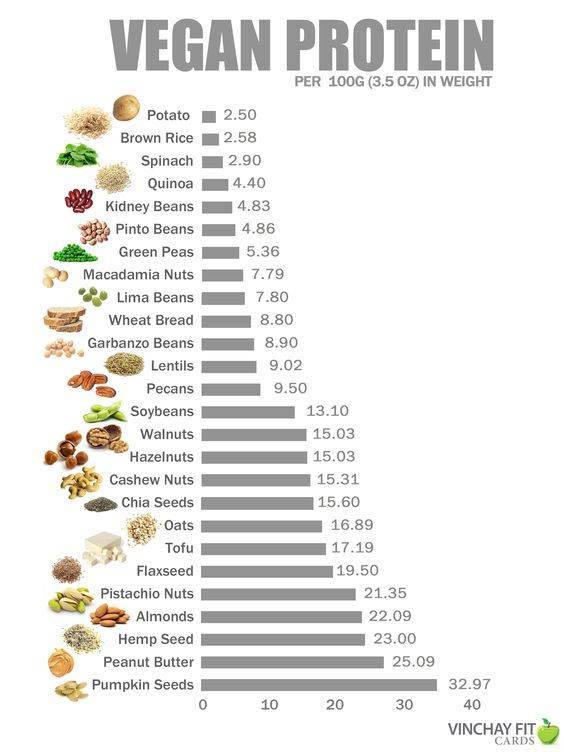
are gaining new acceptance, so says the headline. In Orthodox Christianity we’ve been following a fasting diet for around 20 centuries and, as a general rule, support the idea of moderation in our consumption of food throughout the year. From time to time stories like these remind us that our ancestors, although not as technically advanced as we are, had wisdom that has stood the test of time couched in the form of stories, traditions, and spiritual writings.


if you live this Orthodox life. There’s no question about it. Out of step with the flow of the world around you. It really can’t be any other way.
I’m thinking about this as Lent is drawing near with its Wednesday and Friday services and, in our area, Sunday afternoon Pan-Orthodox vespers. Then, of course, there’s Holy Week. Even outside of Lent my schedule is just different because my Faith calculates time with little thought to the commercial, social, and digital world in which I live. When something has to give its that larger world and not the world of my Faith that has to do the giving. It’s just part of how this thing called Orthodoxy works.
What I’m trying to value is out of step as well. If I am to seriously be Orthodox my political life, as this is an election year here in the United States, will never quite fit in any of the categories provided for me. The same for my economic life. As the culture changes my views on sexuality and family are becoming way out of the mainstream, and lately I’ve been noticing it all.
It’s probably because of where I believe I’m headed. I’m trying to be wherever Jesus is and although I’m not even close to being good at it I still want to try. As I get older I understand more and more that when that’s your destination things are just going to be different, and I’ll be different, too, just a bit out of step with the world around me, attached but not too tightly, and traveling on a path at variance with the paths around me.
All of this is not a complaint, but rather a statement of fact. One of the great blessings of growing older is the lessening of the pressure to be like everyone else. I’m much more comfortable in the understanding that my Faith will mean that some days I will truly be out of step with the world around me. Still, as I get closer to home I also understand in ever greater depth why this is the way it must be and the joy of it all increases as well.

When you come into the Orthodox Faith from outside there is a kind of hope. You’ve read the material. You’ve kicked the tires a bit. In some vague sense there is an awareness of the reality that problems, struggles, challenges, and sin exists within Her yet they don’t seem to be at the front of your mind. The beauty of it all just sort of eclipses everything else.
You can run on that energy for some time, years even. Hope is a powerful force and even as you experience more of the humanity of the Faith that hope covers a multitude of things so that you can carry on even as you become more aware of not just the promises you read about in “Becoming Orthodox” but the everyday life in your everyday parish.
Somewhere along the line, though, the rose color will disappear from your glasses and you’ll discover that, well, your church, that shining city on the hill you had hoped for, is filled with people, regular people with every liability that comes with being human. You wanted something bright, beautiful, and glorious, and, while that occasionally happens, what you often get is something worn, tired, and less than the ideals that drew you to Her door.
At this point people will give up. When, as they say, the “Thrill is gone”, people do get up and leave, even the Orthodox Church. It happens all the time. Others give up while staying, marking time with lowered expectations and a kind of steady numbness that allows them to make do. Neither is particularly healthy. If you leave the Orthodox Church to “shop” a while for a new thing in time that new thing will, like your Orthodox experience, grow old as well. Count on it. If you decide to “Drop out” while still in the Orthodox Faith you’ll at least be present but it will largely be pointless, a whole bunch of Sundays spent going through the motions.
Instead, I think, the answer lies in being the kind of Orthodox Christian you’d like your parish and the larger church to be. If you want a dynamic, active, and living Faith, the kind of Faith you read about in the books, the kind that stirs your soul and challenges you to holy and good things, the only place to start is with yourself. The revival you are looking for begins with you. The grace you are looking for is the grace you receive, cultivate, and share. The holiness you desire will only be as vital as your own. The mission you want for your parish is the mission you undertake. If you want a lively parish you must have a lively faith.
Of course this is not easy. Orthodoxy is not easy because it is thorough, deep, and profound, even if some times, or most times, its collective and human forms do not live that way. If you want something better than what you see around you, don’t leave or spend your life of faith in numb despair. Resolve to be the kind of change, the kind of holiness, the kind of grace, the kind of beauty, that drew you to Orthodoxy in the first place and in saving yourself you will save others as well.


 The Beautiful Path