This week's sermon in advance


32nd Sunday After Pentecost
January 21, 2007
Homily

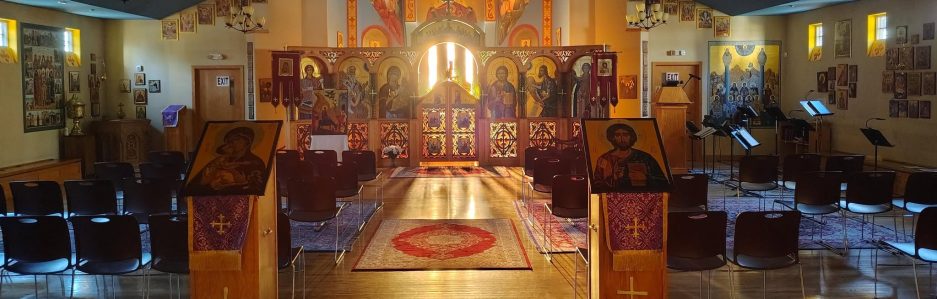
I can be a pain to travel with sometimes because I like looking at churches. Jane and I will be driving through a town and I may see a steeple and off we go a few blocks out of our way just to drive by and take a look. I like the look of churches. I like the smell of churches. Every church is unique and every one has a story.

People’s hopes and dreams used to be tied up in churches. In a culture where most people spent their whole lives in the employ of others the church was often the one place where a group of people could build something for themselves and create a legacy for the future. Even in an old church building you can still feel some of that spirit, the dreams and aspirations of people who have long since passed from the thoughts of those who serve and sing and worship in the present.

And I confess to a certain romanticism about it all. I may be naive but I do believe the world can be changed for the better by the Church. I do believe there is grace and power and life and light that resides even in the most humble parishes. Properly guided and allowed to flourish, it can change lives and communities and nations. It’s why I chose ministry and perhaps why ministry chose me and I’ve seen enough glimpses of the good stuff to know its real and there’s more out there and I’ve spent large portions of my life trying to help people discover it in themselves and their parish.

What you don’t know is that every time I come to St. Elias a transformation takes place inside of me. The church is empty when I arrive, the lights are off, and the only sound is usually Jane working on the bulletins downstairs. Almost every time as I go about the prayers before the liturgy I think to myself “Is it worth it?” “Am I making a difference?” Sometimes I’m tired. Sometimes I’m sad. Sometimes I worry. Sometimes I’m frustrated. But the prayers carry me along.

And without fail by the end of the Liturgy I am at peace and rest and any of the internal struggles have drifted away. I see your faces and feel your hearts and hope arises again. Every Sunday ends as it starts with the church dark, the sounds of Jane downstairs, and me standing in front of the altar one last time before I go. When I do I pray for revival here in the parish and I thank God for the privilege of serving you as Priest. The trip home passes in peace.

Everything in the life of the church can be taught except one thing. Our Orthodox history is full of examples for us to follow, saints to emulate, parishes who have modeled a life of holiness, service, and worship. There are a thousand techniques to make a church healthy, self supporting, growing, and thriving, and we can learn them together.

But only hope cannot be taught. It cannot be finessed. It cannot be sold like a product. It cannot be charmed. It exists or it does not and the very future of things is tied to whether it lives or has long since passed away. Everything can be taught except for hope.

If hope is present people will endure the struggle. When hope exists people will give of themselves for the sake of it. A living hope inspires. Hope gives wings to dreams, turns faith to sight, and transforms those who have it and those who need it. Hope is why this parish was founded and why it was restarted and it will be the core, if in God’s will we are to become what we were meant to be.

And what is hope?

For Christians hope is not just positive feelings or wishful thinking. Hope is not a disconnect with reality. Instead hope transforms the reality we experience in light of something larger and more real. Hope is a kind of vision that lets us see with the eyes of faith and know that God exists, God providentially has all time and history in His hands, and He will strengthen the weak, empower the powerless, bless the poor in spirit, work His salvation in us and in the world, and bring all creation back to His embrace.

Yes we must trust people and make plans but ultimately that is all secondary to this ultimate hope in God. This is the hope the Apostle Paul had as he writes in our epistle, the hope that allowed him to endure and work and see things yet to be as if they already were. Despite the troubles that often plagued him and the dangers he routinely faced he had a deep and abiding confidence in the love and care of God which guided every step he took and allowed him to come to the point where life, death, and all that we fear were swallowed up in the reality of God.

Hope in God can put a fire inside of us and give us the vision to see what we could be, what we were meant to be. Hope will give us the strength to bend our shoulders to the tasks ahead. Hope will give us generous hearts. Hope can motivate us to learn and grow. Hope stills our shaky voices and gives us the courage to stand and speak. Hope drives us to our knees to lift ourselves, each other, and our lives to Christ our God. Hope challenges us to stand together, work together, and be something greater together than what we could be apart.

In a little while we will be at our annual meeting to care for the business of this parish. Practical things must be handled but not as an end to themselves. My desire is that this meeting will be, above all, a place where hope begins to bloom, where we catch of vision of who God is that animates our future together and makes the nuts and bolts of things be filled with the life of God. Perhaps today can mark the start of our not giving in to fear, our temporary smallness, and the empty spaces in the pews. Maybe today will be the day when past struggles cease to haunt us, where our history gives us wings to fly, and hope moves us, in joy, to worship, prayer and action. Let this day be filled with an abiding trust in the reality of all that God is and because of it let us never be the same again.

Lies, damn lies, and statistics…

A recent headline in the New York Time proclaimed that a majority of women in the United States are now not married. How did they get to that conclusion? Why by playing fast and loose with the numbers of course!

Another conversion story…

Spent some time this morning reading the conversion story of Elizabeth Fox-Genovese, in this case from a generic and secularized Christianity to Catholicism. A good read and a story that is repeating over and over as well educated participants in all the best of secular culture leave that world for historic Christianity.

The reasons, of course, vary but the general thrust seems to be the same. At its heart a secular life is counter human, meaningless, and an endless journey of personal indulgences that destory the very soul they claim to liberate. Freed from history and its wisdom there is only spiritual, intellectual, and social chaos and those who embrace this liberated life find that for society, and their own lives, to work there must be either a veneer of the old ways to provide cohesion or an increasingly rigorous set of authoritarian principles designed, ironically, to enforce this relativism on those whose very instincts detect its emptiness.

Enter the Church as She was meant to be, a counter movement to the brokenness of the world, and radically transforming what we consider to be normal. And yet in Her life is to be found a kind of wholeness, humanity, and life that is deep and true and meaningful. Within Her people become truly alive, many for the first time, and only to the extent the Church embraces the values she was meant to confront does it become a partaker of their death. Wise people willing to ask questions and desperate people who have bought everything, slept with everyone, embraced each fad, and in doing so come to the end of themselves discover the value of this Faith, this life, and this hope.

And perhaps the greatest irony of all is that it takes incredible faith to live a life disconnected from something transcendent, where all is as you interpret it, and where your thoughts, your emotions, your will, and this moment is all there is. To do so you must ignore a lifetime of evidence, the pain of the world around you, and the screaming emptiness inside in the hope that just one more freedom, one more liberation, one more technique, or one more philosophy will finally make everything right. Certainly more faith then it takes to believe in Jesus and be well.


Gotta be kidding right?

Senior Islamic clergy in Saudi Arabia deny a businessman a trademark because it has the English letter “X” in it and looks, according to them, like a Christian cross.

And we’re selling these folks advanced jet fighters right?


The day after…

Yesterday was the day after a blizzard and after living in these parts for most of my life I’ve come to appreciate the day after.

Blizzards are part and parcel of life here in the North. Snow falls. The Wind blows. The wise stay home but those who must travel find the normally hospitable roads have grown narrow, uncertain, and drifted with white. In long single lines we crawl to our destinations and keep moving even when we see lights backwards and low on the road, the unmistakable sign of a car in the ditch. Like a herd that keeps moving after the lions have struck the weak we keep driving, (everyone has cell phones now right?) the car smelling of heat, the radio droning on, and a million white dots of snow in the headlights.

But it passes, as all things do. When the weather breaks the world is white and clean, at least for a day, and people emerge from their shelter. From inside the house you hear the scratching of shovels or the puttering of snowblowers. Trucks are on the street and in their glory as they skim through the rutted streets. The condescension of hybrid owners is meaningless today. If you’ve been any kind of decent person at all there will be someone to help you push your car and the grocery stores are full of people with big jackets and funny hats and better than usual attitudes unless they were towed to the city impound.

You see on the day after a blizzard you have to be a neighbor. In the world there are jerks and predators and wierdos and politicians and most of us spend our time just ducking for cover from them all and hoping to keep the noise down. But on the day after a blizzard the good people come out, the friends, the neighbors, the helpers, and the doers and do what they do best, shovel a little more, make sure the older lady next door is okay, share a ride, and look out for each other.

The snow on the day after a blizzard is beautiful but what it can bring out in people is more beautiful still. Would that every day be like the day after a blizzard.

This weeks' sermon in advance…

January 14th, 2007
Leavetaking of Epiphany
Homily

It was said of the legendary George Halas, owner and coach of the Chicago Bears that he once described football as “22 men desperately in need of rest being watched by 80,000 people desperately in need of exercise…”

In the epistle reading today, and in fact through the whole New Testament and the early church fathers, we are presented with a vision of the church as a unity, a body, and a place where different people, united in a common faith, are given a diversity of gifts by the one Holy Spirit, gifts given to be used for the building up of the faithful and blessing the world. We claim, as Orthodox, that this Church is us, or at least we represent a fullness of this that is not possible outside of us.

So why don’t we look like this?

If these are truly the roots of our Faith how come Orthodox parishes too often look like George Halas’ description of football and too little like the exhortations of St. Paul?

Somewhere along the line we’ve lost something and we see Church as something we go to and ministry as something that Priests do. Neither of them is completely true and both ideas have brought us to the point where we often have a select few people performing in the front for the benefit of those who sit silently in the seats. And that hour and a half is what constitutes “church” for the vast majority of Orthodox.

Is it any wonder that people drift away from the Liturgy because they see it as a service rendered to them and are disappointed when they can get a better show on TV?

Does it suprise anyone that our Orthodox pews are filled with people who are either spritiually frustrated because they feel like they can’t use their faith or those who have just grown cold and silent and accept that deadness as what being an Orthodox Christian is all about.

And why does it seem that so many Orthodox leave the church and find another where, despite their being baptised and chrismated as Orthodox, they feel like they have been “born again”?

We often complain about the ethnic clinginess of Orthodoxy and there is a great deal of truth in that. But we should also be glad because there are times when only ethnic and family obligations, and not the lure of a living relationship with Christ, kept people walking through our doors.

But it was never supposed to be that way.

Yes, Orthodoxy has hierarchy and structure and liturgy and sacrament. The church always has and there was never a golden age of apostolic simplicity where everything just kind of went along with the flow. There’s not way to read the history of the church without seeing that all these structures that are part of our life were there from the beginning. We have more now but they are not different.

But they were given by God not for the purpose of endowing and enriching a caste of professionals to rule the masses and provide necessary services. Instead they were to bear rule and teach and handle sacred things correctly to the end that all the people of God would also be able to exercise their various callings and ministries, their priesthood, in the life of the church and the world.

In return it was understood that the people of God would respond to the teaching and leadership and service of those in authority by seeking to be as fully active, alive, and serving in their faith as possible. No spectators were allowed, all were called to be on the field, playing the game as it were, and seeking to bless each other and the world with all the riches that are found in Christ.

And in a continuation of that it is our Orthodox understanding that this active life of faith, nurtured by sound teaching and the sacramental life of the Church, was never simply a matter of Sunday morning worship. Our Divine Liturgy is most certainly the height of what we do but it is not the extent of what we do. Strengthened by sound teaching and nourished, healed, and forgiven in the sacraments we are to go into the world and be Christians not as a convenience but everywhere, always, and completely. Church never ends at our door, and if it does we are not truly a church no matter how nice our Liturgy is, how beautiful our icons are, or what great kibbeh we can make.

What is needed in our Orthodox churches is not some new fad or program but rather a return to some long forgotten roots of our faith, to an understanding of who are as people of God endowed with spiritual gifts by the Holy Spirit which we are commanded to use for the salvation of our souls and the world.

If you’ve ever asked yourself why you don’t feel fulfilled as a Christian maybe its time to make your faith real, alive, active, and more than Sunday morning. The bottom line is you get what you put into it and too many Christians are missing out on incredible things simply because they’ve been hanging out on the sidelines.

If you’ve ever thought how come churches sometimes turn on themselves and people get nasty just remember that idle hands are the devil’s workshop and people with nothing else to do have a vacuum inside that can be easily filled with dark things.

If sometimes you wonder how the world got to be the way it is stop complaining, light your light and make a difference.

If you think Liturgy has become routine try getting involved, sing where you can, follow the prayers and make them your own. Come expecting to give and discover that in doing so you still receive.

None of what has been said is about condemning you or making you feel guilty. I struggle too but that doesn’t mean what the Apostle Paul said to that church in Ephesus so long ago isn’t true, then or now. There is so much more to this faith, this Christians life and more than anything else I want you to know even a taste of it because if you do you’ll never want anything less again.

When I was a Baptist and it was time to move ahead we used to say “It’s time for us to get off our blessed assurance..”

Is this our time?

Moments in time…

It’s annual meeting time again in the Orthodox world, the time to take stock of things, go through the numbers, and plan for the year ahead.

The truth is most Orthodox would rather do a hundred prostrations on broken glass than go to the annual meeting. They can be painful, protracted affairs where every bit of dirty laundry, simmering feelings, and lunacy may surface. People who haven’t given a dime or a moment to the Parish can suddenly show up with “deep concern” over something their slightly more devout cousin or uncle or somebody said was going on. To get out in under two hours is a distinct blessing from heaven.

Part of that, of course is our own fault. We Orthodox have created a church in this country that is hyper-clericalized with lauds poured upon overworked clergy and passive spectators taking it all in like folks at a football game or a show. Into that idle void the devil contructs a workshop and the annual meeting is one place where the spectators feel like they can give their opinions and fulfill their need to matter in a most perverse sort of way.

I do believe if Orthodox people were truly knowledgeable, involved, and growing in their faith 99 percent of our problems would disappear. They would understand by doing and being. They would be learning and growing instead of watching and stewing. They would feel fulfillment in their calling and not be so quick to wreak havoc on the work of others.

We Priests would benefit as well. We could be what we were called to be, a player coach of the team rather than the performer behind the screen. By our teaching and prayers we could help those we care for be the best they can be rather than spend our days smoothing over pathologies (including our own). I have seen both sides of the coin, the hyper individualism and anarchy that marks so much of the life of protestant churches and the lock step hierarchy where a few lead and hope others follow. Both miss the mark.

It’s time for change and a return to balance and the revolution starts when all the people of God turn back to the sources and learn again from our Tradition what it means to be a church.

Taint so McGee….

You know that whole story people tell to warn people about ignoring danger, you know the one about a frog who will jump out of a pot of boiling water but won’t if the temperature is increased slowly until its boiling? It’s bunk.

I suppose that makes the sacrifice of the frogs worth it.

That being said it still takes a disturbed mind to even think about casually boiling a live frog.