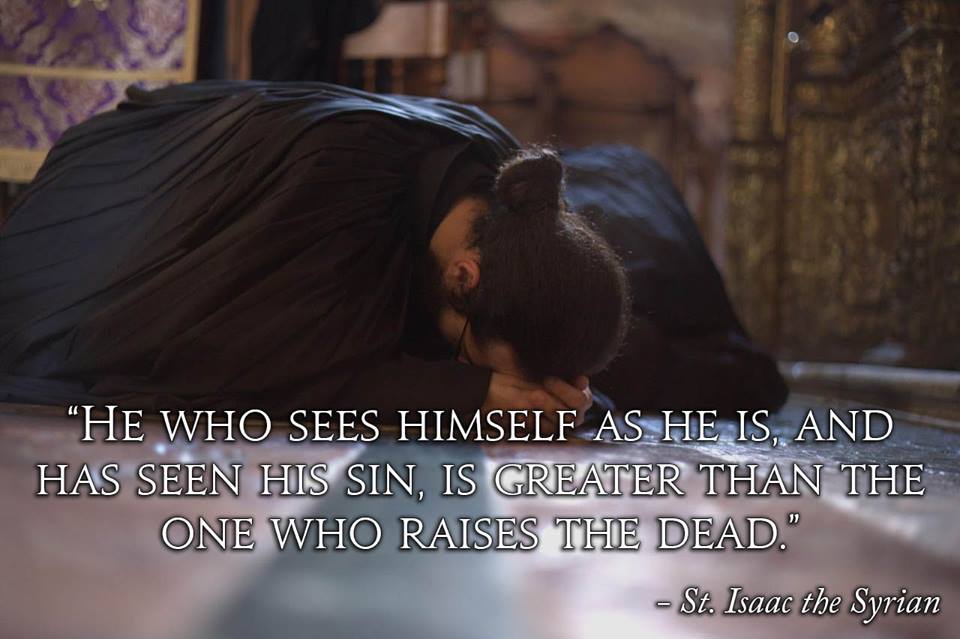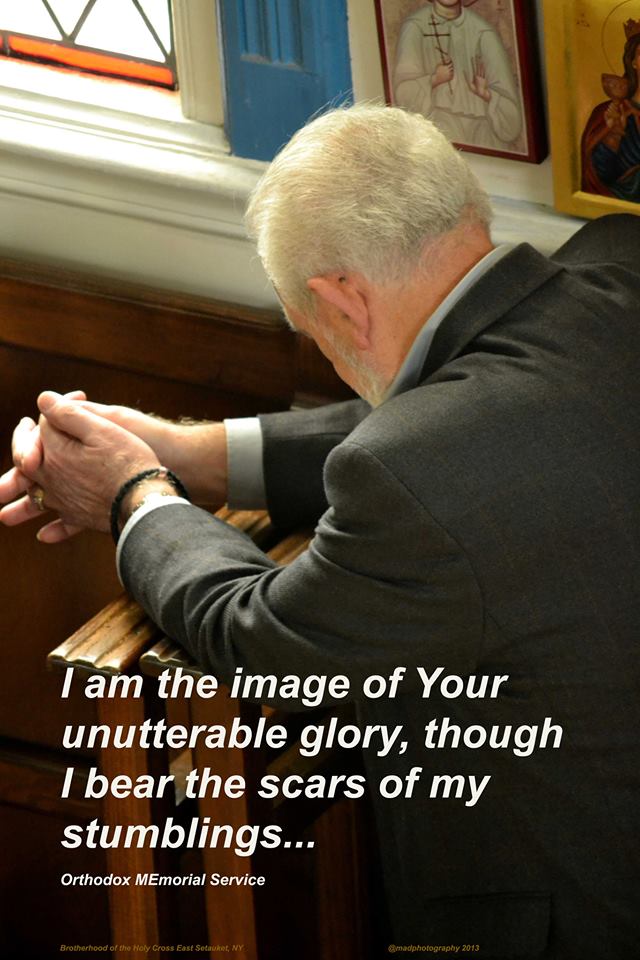
A Prayer…

From the Holy Fathers Facebook Page.

Breathe in me, O Holy Spirit, that my thoughts may all be holy. Act in me, O Holy Spirit, that my work, too, may be holy. Draw my heart, O Holy Spirit, that I love but what is holy. Strengthen me, O Holy Spirit, to defend all that is holy. Guard me, then, O Holy Spirit, that I always may be holy. Amen.

Saint Augustine of Hippo

A Good Word…

O how great was the fearlessness of the holy men and holy women! When we read about their lives, both shame and pride is awakened in us unwillingly – shame that we have lagged so far behind them and pride that they are of our Christian race. Neither sickness, nor prison, nor exile, nor suffering, nor humiliation, nor the sword, nor the abyss, nor fire, nor the gallows were able to shake the exalted peace of their souls, firmly attached to Christ, the Helmsman of the universe and human history. When Emperor Julian apostasized from the Faith and began to make waste of Christianity throughout the entire empire, St. Athanasius the Great quietly spoke of him to the faithful: “The cloud will pass!” (Nibiculaest, Transibit). And indeed, that dark cloud quickly passed and Christianity lowered its roots even deeper and spread its branches all the more throughout the world. The weakened wickedness of Julian against Christ was ended after several passing years with Julian’s cry: “O Nazarene, You have conquered!” O sons of God, why then should we be afraid of anything from which God our Father is not afraid?

Prologue from Ochrid

From Holy Fathers on Facebook.

Worth a Read…

A review of the book “The Unintended Reformation”…

The underlying problem is that most people seek–and through relentless advertising are encouraged to pursue–ever greater material affluence and comfort, despite the fact that the average American income, for example, rose eightfold in real terms during the twentieth century.  Westerners now live in societies without an acquisitive ceiling:  a distinctly consumerist (rather than merely industrial) economic ethos depends precisely on persuading people to discard as quickly as possible what they were no less insistently urged to purchase, so that another acquisitive cycle might begin

If “rights” and “persons” no less than “morality” are mere constructs without empirical grounding in the findings of science, and only science can legitimately tell us anything true about reality, then such constructs can be deconstructed and dismissed in the pursuit of alternatives.

>Reformation leaders thought the root problem was doctrinal, and in seeking to fix it by turning to the Bible they unintentionally introduced multiple sorts of unwanted disagreement.  This constituted a new set of problems, different from the first.  What was true Christianity and how was it known?  Doctrinal controversy was literally endless, and religio-political conflicts…were destructive and inconclusive.

What sort of public life or common culture is possible in societies whose members share ever fewer substantive beliefs, norms, and values save for a nearly universal embrace of consumerist acquisitiveness?

Read more here.

Never…

mistake technological progress for human evolution. We have better machines but our human nature, broken and challenged, touched by eternity and yet so very mortal, has remained a constant over the eons of human existence. Thus while an old machine may have truly outlived its usefulness an old truth, even an ancient one,  related to the human condition may still be valid precisely because it has endured.

As I Was on My Way…

to the Orthodox Church more than a decade ago I had the privilege of spending time with Fr. Michael Harper and his wife at a local restaurant. Fr. Harper had been an Anglican Priest and a leader in the world charismatic movement and was now Orthodox. As the meal progressed we spoke of the transition to Orthodox Christianity and he said something that has stuck with me over time. He told me that as he was on his own journey to Orthodoxy  he struggled with the idea of praying for the departed, a common Orthodox practice. Yet, he said, there was a choice. He could form the “Fr. Michael Harper Orthodox Church without prayers for the departed” or trust that even though this issue was personally difficult there was a larger wisdom on this matter in the life of the Church, a wisdom in which he could rest.

The challenge in this understanding lies in being able to rest, to trust, and to believe and not be the center of your own theological universe. To be Orthodox is to belong to something larger than yourself, to be a thinker, for sure, but one who thinks in community and communion. A person does have to set aside a certain amount of ego to make this a reality in their lives. In a culture where the emphasis for some time has been on micro-religion, that is individual and atomized belief structures peculiar to a person’s own experiences, this may require a lifetime of adjustment and be a central struggle to adopting not just the Orthodox label but the Orthodox way of life.

The strength, though, of this understanding lies in the freedom that comes with not having to personally reinvent the wheel each time a wheel is needed. There is none of the loneliness that comes with believing you have to create and sustain a spiritual way of life with only what you might have on hand at any given moment. You can learn from others, share in wisdom that’s been worked out over time, and realize a whole universe of fellow travelers walking with you on the beautiful path.

The late Fr. Harper made his choice and stepped through the doors of Orthodoxy. I took his words to heart and stepped through myself some time after this encounter. A perfect world all of the time? No. Yet there is rest here and that’s made it worth it all.

I’m Aware…

of the sins, the struggles, the general craziness that rears up, sometimes daily, in the Orthodox Church. I’m aware of our scandals, our tragedies, the games played behind the scenes, and many places where we fall short of our ideal. I am touched by them. At times I am, regrettably, part of them. I sin and struggle and so do the people of my Church.

I’d like it to be better. I wish everyone in my Church were perfect and myself the first. The process of becoming perfected is horrible sometimes.  There is so much to clear away, so much to remove, so much illness to be scoured out. The thought of it overwhelms me at times. Sometimes I despair. Sometimes I think of just letting it all fall away and leave for that elusive something, somewhere, where the grass across the fence seems greener.

But I won’t. I plan to stay.

I know that the day to day affairs of Orthodoxy can be touched by deep darkness and knicked by a thousand small sinful cuts. Yet I know that its also the way out of all of those things, the sins, the struggles, the dark moments, and the disease which sometimes effects everything from the largest structure of the Church to the smallest corner of my soul. It remains the beautiful path. Narrow for sure, often untrod, and surrounded by dangers, but yet the beautiful path.

My prayer is only that I stay on this path as best as I can and when I wander away I retain enough sense to find my way back. While I see the cares and struggles around me I pray that God gives me the vision to keep my eyes focused on Christ who walks with me on the way and is also the goal of my travels. If I do that I may not always be in the most comfortable spot but I will be safe, and that makes all the difference.

A Challenging Word…

The venerable Maxim the Confessor says: “Should we not tremble, hearing how God the Father, without judging anyone Himself, ‘hath committed all judgment unto the Son’ (John 5:22)? And the Son, our Lord Jesus Christ, says to us: ‘Judge not, and ye shall not be judged’ (Luke 6:37). Similarly Apostle Paul says: ‘Therefore judge nothing before the time, until the Lord comes’ (1 Cor. 4:5), and again: ‘for wherein thou judgest another, thou condemnest thyself’ (Rom. 2:1). I tell you, it is so: for men, having ceased to weep over their own sins, have taken the judgment out of the hands of the Son, and judge and condemn each other as though they themselves were sinless! Truly this frightens the heavens and makes the earth tremble.”

Centuries  pass,  yet  men  still  stand  before  this  unassailable  wall  of  condemnation  and  are  unable  to  overcome  it.    Adam,  justifying  himself  in  paradise  before  God,  condemned   Eve;    Cain,  having  condemned  his  brother  Abel  in  his  heart, killed  him;   the  sin  of  condemnation  led  the  Jews  to  kill  the  Messiah;   and  we,  modern  Cainites  and  Pharisees,  are  pushed   by  condemnation  to  a  daily  spiritual  execution  of  our  brothers.

Judgment  tortures  the  doers  of  it  themselves,  takes  away  their  peace  of  mind,  forces  them  to  continuously  monitor  the  actions  of  those  around  them,  and  poisons  their  souls  with  the  bitter  poison  of  suspicion.

An  elder  once  said:   “It  is  easy  to  step  unto  the   path  of  salvation:   you  must  only  firmly  decide  that  from   this  moment  you  will  no  longer  judge  anyone.”    We  can  understand  these  words  with  our  mind,  but  how  do  we  actually  accomplish  them?    For  this  we  must  understand  why  we  judge  others.    The  reason  lies  in  our  false  self-evaluation:   he  judges  others,  who  feels  that  he  has  a  right  to  judge,  who  places  himself  higher  than  others,  who  sees  himself  blameless  of  the  sins  of  which  he  accuses  others.    Whoever  is  not  aware  of  his  own  spiritual  corruption,  will  never  cease  to  judge  others.

But  we  are  all  tarnished  by  sin,  we  all  agonize over  our  corruption,  we  all  hope  for  deliverance  in  eternal  life,  we  all  have  need  of  Divine  aid.    Again  we  know  all  this  theoretically,  but  in  practice  it  is  painfully  difficult  to  refrain  from  judgment;   we  yearn  to  judge  others.    Why?    Because  judgment  has  become  a  passion  with  us  and,  like  all  vices,  it  gives  us  demonic  pleasure,  a  shiver  of  prideful  delight.    How  “delightful” to judge someone in the course of a friendly conversation, to laugh at another’s deficiencies… But do we not heed the warning of the Gospel that some day we will have to answer for every single word we utter, and that includes this false delight which is based on condemnation?

The  struggle  against  the  vice  of  judgment,  like  any  other  vice,  cannot  be  theoretical;   it  must  take  place  every  day,  every  minute,  throughout  one’s  entire  life;    it  must  be  based  on  forcing  oneself  to  be  attentive  to  all  one’s   words  and  thoughts.    In  other  words,  we  cannot  do  without  spiritual  labor.

But  of  what  should  this  spiritual  endeavor  consist   in  such  a  case?    In  monitoring  oneself  with  utmost  attention   throughout  all  the  various  circumstances  of  life.    Moreover,  we  will  soon  notice  that,  in  the  course  of  the  day,  occasions   for  judgment  surround  us  like  invisible  underwater  reefs  and  threaten  to  destroy  the  ship  of  our  soul.    However,  with  God’s  help,  we  will  gradually  learn  to  avoid  collision  with  these  underwater  reefs:   where  we  formerly  became  irritated  –  we  will  remain  calm;     where  we  became  angry  –  we  will  remain  silent;   where  we  tried  to  justify  ourselves  –  we  will remain  humble;   where  we  judged  others  –  we  will  pray  for  them  and  for  ourselves,  in  order  to  avoid  similar  sins.

Very  soon  we  will  notice  that  our  soul,  no  longer  burdened  by  judgment,  will  experience  genuine  spiritual  joy  and  lightness;    and  that  is  only  natural,  since  the  yoke of  the  sins  of  others  will  no  longer  oppress  us.

Just  as  judgment  attracts  other  vices:   anger,  quarreling,  enmity,  so  a  victory  over  condemnation  opens  the  way  to  other  virtues:   pure  prayer, tranquility,  a  true  evaluation  of  one’s  sins.    It  is  for  this  reason  that  demons do  their  best  to  ensnare  the  soul  into  the   nets  of  judgment,  and  to  hinder  its  liberation  from  this  vice.    In  turn  we,  too,  have  no  right  to  delay  our  struggle  with  judgment  for  the  same  reason,  but  must  immediately  begin  to  watch  ourselves  attentively.

“To  watch  oneself”  is  the  golden  rule  of  Christian  morality,  which  –  alas!  –  is  so  often  neglected  by  Christians.    How  much  effort  we  spend  on  external  activities  and  how  little  energy  we  save  for  the  task  of   monitoring    ourselves.    And  yet,  without  this  internal  endeavor,  nothing  external  will  ever  lead  us  to  salvation…

Saint  Seraphim  of  Sarov  said  that  the  goal  of  Christian  life  is  the  acquisition  of  the  Holy  Spirit.    And  to   attain  this  goal  we  must  step  onto  the  path  of  a  spiritual struggle  with  passions,  and  with  God’s  help,  overcome  them  one   by  one.    But  we  can  begin  the  battle  with  this  same  passion  for  judgment.

Let  us  remember  the  words  of  the  elder:   “It  is easy  to  step  unto  the   path  of  salvation:   you  must  only  firmly  decide  that  from  this  moment  you  will  no  longer  judge  anyone.”

(Reprinted  from  “Orthodox  Russia,”  No. 20,  2002)

On Smartphones and Lost Weekends…

“It’s like an arms race … everything is an emergency,” said Tanya Schevitz, spokeswoman for Reboot, an organization trying help people unplug more often. “We have created an expectation in society that people will respond immediately to everything with no delay. It’s unhealthy, and it’s unproductive, and we can’t keep going on like this.”

Read more here.