I wish all of you a very blessed Nativity!
Christ is Born! Glorify Him!
Life Along the Orthodox Way
I wish all of you a very blessed Nativity!
Christ is Born! Glorify Him!

In this most recent storm the good folks in Seattle’s government have decided not to use salt and other chemicals on the road because they don’t want to have some of it end up in Puget Sound. The result has been impassible streets and police vehicles unable to navigate in certain areas.
My only suggestion is that sometimes the people on the coasts might want to check in with us folks in “fly over country” about how we deal with snow because unlike Seattle, we get a lot of it and know how to handle it. In our neck of the woods, a blue as can be state with a long history of environmentalism and lots of fresh water lakes, we use salt and sand and plow down to the pavement whenever we can. We figured out a long time ago that this was safer and more effective then waiting for the stuff to melt, which in our case means waiting for April, or using snow tires and chains which can, by constant use, beat up the roads. Quality of life is irrelevant if you’re stuck in your house for a week or the ambulance crew can’t get to you because the city is afraid some salt might get into the salt water.
We may be rubes out here in the middle of the country but at least I could, despite about a foot of snow in the last week or so, drive over to Caribou and get a coffee.

Winter has just barely begun and I’m already feeling washed out and snowed under. My clothes smell like snowblower and the cold has settled into my bones. When I was a child this all was part of the fun, the snow, the season, the anticipation, and the ambience of it all. All I can say is that I’m not a child anymore.
The world and I have aged and grown cynical together, buried in the details, counting the cost, worried about the future. It’s the great sorrow of growing older; you can stay up as late as you want and buy a car with your signature but you learn too much as well: Too much about life, too much about the reality of the human condition, too much about how things really are, too much about yourself.
Early on we learn to pretend, talking about life, where we are, who we are, and everything else with the practiced happiness that comes when we get a really bad sweater for Christmas. We do our part to keep up appearances and take one for the team all the while hoping that somewhere along the line we get a taste of the real thing, a moment or two when we are who were supposed to be, when the joy is real, and our hearts are alive.
Such is life in the frosty white broken world of these times. The sad truth is that its been that way since the first swallow of Eden’s fruit. We who were born to shine like the sun have few moments when we live as we were intended; the joyful creation of the maker of the universe. More often we pass through life as a mixture of thoughts, actions, hopes, dreams, struggle, and the nagging sense there is more just beyond our grasp.
And I want it back, that kind of primal innocence, the sense of meaning in the world, the joy of life. I want to possess what has always seemed to elude me. I desire to be somewhere in time before trees and snakes and walk with my Maker in the cool of a summer night. I’m weary of my brokenness. I tire of my frailty. I am exhausted by the restlessness of my spirit.
I must travel, not in the wanderings of life carried by the winds of fate, but directly, with intention, with perseverance, undistracted. No matter how the world as it is shouts at me, discourages me, or attempts to turn me to this side or that I must follow that star and travel straight on until morning. I must see Bethlehem in my heart and when I get there I will stand with the shepherds and see this great thing, this birth, this Christ that has come into a cold dark world so that nothing, and no one, will ever be the same again.
Then I will rest for as long as it takes, forever even, and my soul will be quiet, my innocence returned, and my heart released to live where no winter, of body or soul, can ever settle and the child I was meant to be fills even the oldest frame.

Our culture is, at the present, comprised of a very large majority of spectator consumers watching, judging, appraising, and observing a handful of people who actually do something. But no positive change will come until people, especially Christians, reverse this.

Many Christians think that Christians celebrate Christ’s birth on December 25th because the church fathers appropriated the date of a pagan festival. Almost no one minds, except for a few groups on the fringes of American Evangelicalism, who seem to think that this makes Christmas itself a pagan festival. But it is perhaps interesting to know that the choice of December 25th is the result of attempts among the earliest Christians to figure out the date of Jesus’ birth based on calendrical calculations that had nothing to do with pagan festivals.
Read the rest of the article here…

Strangely enough tomorrow is among the best days of the year.
December 21 marks the swing from dark to light, that is the daylight gets longer, incrementally of course, surely and steadily through June. Whatever cold lies ahead will, one day, have to give way because the sun cannot be denied. A local radio host likes to talk about the 21st as the first day of spring and calls people who appreciate this day “21sters”. Regardless its kind of a coping mechanism up here and perhaps in the order of things is God’s way of allowing the coldest part of the year to at least have the blessing of increasing light.

December 21, 2008
Sunday of the Genealogy
There’s an old joke that goes something like this: A young man is on the streets of New York and stops to ask a police officer, “How do I get to Carnegie Hall?” The officer responds, “Practice, lots of practice.”
For many years performing at Carnegie Hall in New York was the sign of accomplishment as a musician. A concert at Carnegie meant you had made it into the highest level of your craft and showcased your skill at one of the most prestigious venues in America. Musicians and performers would sometimes just stand on the stage at Carnegie and take it all in because they knew they had arrived. Whatever else happened to them in life they had played Carnegie Hall.
It’s always been this way in every human endeavor. Excellence comes from the continual growth that emerges from constant and effective practice. The constant repetition of solid fundamentals forms the foundation for the development of an increasing level of skill. A great musician is made not when the spotlight is shining on the stage but in the hours of reading music and practicing scales. A great quarterback is built when they get up every day and throw footballs, again and again, until they can do it when someone is tackling them. Every carpenter of note was created by thousands of hours of being with wood.
And it is the same way with faith. Faith grows by practice, the repetition of the fundamentals, prayer, worship, study, praxis (which means the application of ideas to real life) and from that repetition the building of a foundation for increasing skill and technique. There are no shortcuts. If you wish to excel at your job or vocation you must practice. If you wish to develop a faith that matters you must practice it as well.
Now there are communities of faith that offer shortcuts. Some give in to whatever is prevailing in the culture and avoid the difficulty of practice and discipline by saying “Do whatever you want and be whatever you want to be.” But it’s the spiritual equivalent of saying “Eat anything you want and you’ll be healthy.” Others will point to a kind of experience, an emotional happening, and say “If you have this moment everything will be fine.” But that’s being a “one hit wonder”, great when your band is on top of the charts but not such a big deal ten years down the line.
For whatever else Orthodoxy is, it is honest. It tells us, ahead of time and always that the key to a living, growing, faith, to spiritual fulfillment, lies in the transformation of ourselves into the image of Christ and this requires a conscious and deliberate effort on our part, a willingness, empowered by grace and energized by love, to put in the time and effort it takes to be Christian. There are no shortcuts, no half measures, and no quick fixes. We must practice our faith, not just the glorious and wonderful things, but the everyday things, the repetition of the fundament
als that separates the adequate from the excellent.
Yet the irony of it is that when these things are practiced, these basics, prayer, worship, study, and praxis, the process of doing these things releases the joy and power of our faith just as the practice of any skill moves the task from drudgery into art. It’s one thing to go to church service and get your heartstrings pulled for an hour or two but imagine having a deep joy unrattled by the world around you. Practice your faith and in time it will come. It’s good to be here in worship, even if you don’t feel like it all the time, but as you grow in your faith by practice you’ll start to discover why you should be here, why these hours on Saturday night and Sunday morning are the fuel for your life. Practice your faith now and when times of trouble come, and they come to us all, you won’t have to learn important lessons in the fire of adversity because you’ll already have a reserve of strength and purpose to see your way through difficult days. If you wish to have a faith like the kind we’re presented with in our Epistle reading for this Sunday of Genealogy, a faith that can endure, empower, and even transcend death then start with the everyday practice of the basics.
Of course this is not always easy, being excellent in anything is rarely easy. But ask the musician who hears the applause from Carnegie Hall if it was worth all those hours of playing scales and reading music. Question the quarterback in the afterglow of victory whether it was important to get up every morning, watch film and throw passes. Think about the times in your life when people have extolled your skills and then ponder whether it was worth developing them. Then ask yourself, for the sake of strength for each day and in anticipation of heaven’s audience, if the practice of your faith will matter.
I think you know the answer.

Snow tonight. Snow tomorrow. Snow Saturday and Sunday. A trip to western Minnesota on Saturday and LaCrosse, Wisconsin, on Sunday. Oh, and winter doesn’t start until Sunday!
Drive slow. Carry a survival kit. Nature is in charge, no matter what you think.

When I was a Baptist Pastor I remember the annual meeting where, when the topic of salary came up, my wife and I were ushered out of the room to wait, somewhere, until the discussion was over and the votes taken. What do you talk about while you’re sitting alone in a room knowing that folks are talking about you, perhaps in unkind ways (this was a Baptist church after all) and deciding whether or not to give you a raise that maybe kept your head above water.
It is a recurring theme, that so much of what you do as a servant of the church is out of your hands. You can do a marvelous job, and I can’t always say that I have, and still see the same people staring back at you with the same glassy eyes. You can paint a picture for them of what they could be, where they could go, and what God could do through them, and the next Sunday you will see them, physically and spiritually, sitting in the same pew as last week.
All you can do is pray, hope, and do the best you can, and serve with whatever strength is left. Your average parishioner is a good person, sometimes a great one, who struggles with trying to be a faithful person in a decidedly unfaithful world. The spark that lights them never comes from you, it would be preposterous to think so, but only from the Holy Spirit who touches them as they allow and always works with them, as with you, by taking them from where they are to where they should be.
It just out of your hands, and in better ones for sure, but that doesn’t always make it easy.

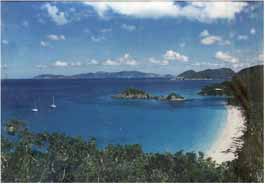 High today of 2 degrees below zero. Temperature down to around -20 tonight. Two hours worth of snow removal this morning and more snow on the way tomorrow. I believe there’s a need for the Antiochian Archdiocese to expand its ministry to the US Virgin Islands and I think I’ll volunteer. : o )


