has been accepted into the OCA and will serve in their Diocese of the South. Axios! Many years vladika!

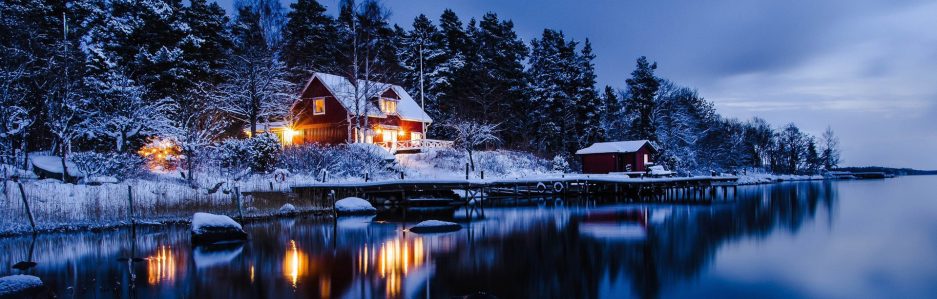
Blizzard pictures…


Share this:

Wisdom from St. Herman…
Once the Elder was invited on board a frigate that had come from St. Petersburg. The captain of the frigate was a man quite learned, highly educated; he had been sent to America by Imperial command to inspect all the colonies. With the captain were some 25 officers, likewise educated men. In this company there sat a desert-dwelling monk of small stature, in an old garment, who by his wise conversation brought all his listeners to such a state that they did not know how to answer him. The captain himself related: “We were speechless fools before him!”
Father Herman gave them all one common question: “What do you, gentlemen, love above all, and what would each of you wish for his happiness?” Diverse answers followed. One desired wealth, one glory, one a beautiful wife, one a fine ship which he should command, and so on in this fashion. “Is it not true,” said Father Herman at this, “that all your various desires can be reduced to one – that each of you desires that which, in his understanding, he considers best and most worthy of love?” “Yes, it is so,” they all replied. “Well, then, tell me,” he continued, “can there be anything better, higher above everything, more surpassing everything and in general more worthy of love, than our Lord Jesus Christ Himself, who created us, perfectly adorned us, gave life to all, supports all, nourishes and loves all, who Himself is love and more excellent than all men? Should not a person then love God high above all and desire and seek Him more than all else?” All began to say: “Well, yes! That is understood! That speaks for itself!”
“And do you love God?” the Elder then asked. All replied: “Of course, we love God. How can one not love God?” “And I, sinful one, for more than forty years have been striving to love God, and cannot say that I perfectly love Him,” answered Father Herman; then he began to show how a person should love God. “If we love someone,” he said, “we always think of him, strive to please him, day and night our heart is occupied with this subject. Is it thus that you, gentlemen, love God? Do you often turn to Him, do you always think of Him, do you always pray to Him, and fulfill His holy commandments?” It had to be acknowledged that they did not! “For our good, for our happiness,” concluded the Elder, “at least let us make a promise to ourselves, that from this day, from this hour, from this very moment we shall strive to love God above all, and fulfill His holy will!” Behold what an intelligent, superb conversation Father Herman conducted in society; without doubt this conversation must have imprinted itself on the hearts of his listeners for their whole life!
(Yanovsky, in Life of Monk Herman of Valaam, 1868)
Share this:

Wisdom from St. Augustine…
He by whom all things were made was made one of all things. The Son of God by the Father without a mother became the Son of man by a mother without a father. The Word Who is God before all time became flesh at the appointed time. The maker of the sun was made under the sun. He Who fills the world lay in a manger, great in the form of God but tiny in the form of a servant; this was in such a way that neither was His greatness diminished by His tininess, nor was His tininess overcome by His greatness. (St. Augustine, Sermon 187)
Share this:

Metrodome caves in…
This weekend’s snow was significant enough to collapse the fabric roof of Mall of America Field, otherwise known as the Metrodome and home of the Vikings.
Share this:

Suffice it to say…
we are well into one of the biggest blizzards in recent memory. The snow was deep enough to flow over the top of my snowblower and one nearby county has simply pulled its plows off the street. Cars on the streets near my house are buried up to their windows and the snow is still falling.
Share this:

Charlie Brown Christmas…
Share this:

Wisdom from St. John…
St. John Chrysostom’s Christmas Homily
BEHOLD a new and wondrous mystery. My ears resound to the Shepherd’s song, piping no soft melody, but chanting full forth a heavenly hymn. The Angels sing. The Archangels blend their voice in harmony. The Cherubim hymn their joyful praise. The Seraphim exalt His glory. All join to praise this holy feast, beholding the Godhead here on earth, and man in heaven. He Who is above, now for our redemption dwells here below; and he that was lowly is by divine mercy raised.
Bethlehem this day resembles heaven; hearing from the stars the singing of angelic voices; and in place of the sun, enfolds within itself on every side, the Sun of justice. And ask not how: for where God wills, the order of nature yields. For He willed; He had the power; He descended; He redeemed; all things yielded in obedience to God. This day He Who is, is Born; and He Who is, becomes what He was not. For when He was God, He became man; yet not departing from the Godhead that is His. Nor yet by any loss of divinity became He man, nor through increase became He God from man; but being the Word He became flesh, His nature, because of impassability, remaining unchanged.
And so the kings have come, and they have seen the heavenly King that has come upon the earth, not bringing with Him Angels, nor Archangels, nor Thrones, nor Dominations, nor Powers, nor Principalities, but, treading a new and solitary path, He has come forth from a spotless womb.
Since this heavenly birth cannot be described, neither does His coming amongst us in these days permit of too curious scrutiny. Though I know that a Virgin this day gave birth, and I believe that God was begotten before all time, yet the manner of this generation I have learned to venerate in silence and I accept that this is not to be probed too curiously with wordy speech. For with God we look not for the order of nature, but rest our faith in the power of Him who works. What shall I say to you; what shall I tell you? I behold a Mother who has brought forth; I see a Child come to this light by birth. The manner of His conception I cannot comprehend.
Nature here rested, while the Will of God labored. O ineffable grace! The Only Begotten, Who is before all ages, Who cannot be touched or be perceived, Who is simple, without body, has now put on my body, that is visible and liable to corruption. For what reason? That coming amongst us he may teach us, and teaching, lead us by the hand to the things that men cannot see. For since men believe that the eyes are more trustworthy than the ears, they doubt of that which they do not see, and so He has deigned to show Himself in bodily presence, that He may remove all doubt.
Christ, finding the holy body and soul of the Virgin, builds for Himself a living temple, and as He had willed, formed there a man from the Virgin; and, putting Him on, this day came forth; unashamed of the lowliness of our nature.
For it was to Him no lowering to put on what He Himself had made. Let that handiwork be forever glorified, which became the cloak of its own Creator. For as in the first creation of flesh, man could not be made before the clay had come into His hand, so neither could this corruptible body be glorified, until it had first become the garment of its Maker.
What shall I say! And how shall I describe this Birth to you? For this wonder fills me with astonishment. The Ancient of days has become an infant. He Who sits upon the sublime and heavenly Throne, now lies in a manger. And He Who cannot be touched, Who is simple, without complexity, and incorporeal, now lies subject to the hands of men. He Who has broken the bonds of sinners, is now bound by an infants bands. But He has decreed that ignominy shall become honor, infamy be clothed with glory, and total humiliation the measure of His Goodness.
For this He assumed my body, that I may become capable of His Word; taking my flesh, He gives me His spirit; and so He bestowing and I receiving, He prepares for me the treasure of Life. He takes my flesh, to sanctify me; He gives me His Spirit that He may save me.
Come, then, let us observe the Feast. Truly wondrous is the whole chronicle of the Nativity. For this day the ancient slavery is ended, the devil confounded, the demons take to flight, the power of death is broken, paradise is unlocked, the curse is taken away, sin is removed from us, error driven out, truth has been brought back, the speech of kindliness diffused, and spreads on every side, a heavenly way of life has been ¡in planted on the earth, angels communicate with men without fear, and men now hold speech with angels.
Why is this? Because God is now on earth, and man in heaven; on every side all things commingle. He became Flesh. He did not become God. He was God. Wherefore He became flesh, so that He Whom heaven did not contain, a manger would this day receive. He was placed in a manger, so that He, by whom all things arc nourished, may receive an infants food from His Virgin Mother. So, the Father of all ages, as an infant at the breast, nestles in the virginal arms, that the Magi may more easily see Him. Since this day the Magi too have come, and made a beginning of withstanding tyranny; and the heavens give glory, as the Lord is revealed by a star.
To Him, then, Who out of confusion has wrought a clear path, to Christ, to the Father, and to the Holy Spirit, we offer all praise, now and forever. Amen.
Share this:

Wisdom from St. Gregory…
“The very Son of God, older than the ages, the invisible, the incomprehensible, the incorporeal, the beginning of beginning, the light of light, the fountain of life and immortality, the image of the archetype, the immovable seal, the perfect likeness, the definition and word of the Father: he it is who comes to his own image and takes our nature for the good of our nature, and unites himself to an intelligent soul for the good of my soul, to purify like by like.
He takes to himself all that is human, except for sin. He was conceived by the Virgin Mary, who had been first prepared in soul and body by the Spirit; his coming to birth had to be treated with honour, virginity had to receive new honour. He comes forth as God, in the human nature he has taken, one being, made of two contrary elements, flesh and spirit. Spirit gave divinity, flesh received it.
He who makes rich is made poor; he takes on the poverty of my flesh, that I may gain the riches of his divinity. He who is full is made empty; he is emptied for a brief space of his glory, that I may share in his fullness. What is this wealth of goodness? What is this mystery that surrounds me? I received the likeness of God, but failed to keep it. He takes on my flesh, to bring salvation to the image, immortality to the flesh. He enters into a second union with us, a union far more wonderful than the first.
Holiness had to be brought to man by the humanity assumed by one who was God, so that God might overcome the tyrant by force and so deliver us and lead us back to himself through the mediation of his Son. The Son arranged this for the honour of the Father, to whom the Son is clearly obedient in all things.
The Good Shepherd, who lays down his life for the sheep, came in search of the straying sheep to the mountains and hills on which you used to offer sacrifice. When he found it, he took it on the shoulders that bore the wood of the cross, and led it back to the life of heaven.
Christ, the light of all lights, follows John, the lamp that goes before him. The Word of God follows the voice in the wilderness; the bridegroom follows the bridegroom’s friend, who prepares a worthy people for the Lord by cleansing them by water in preparation for the Spirit.
We need God to take our flesh and die, that we might live. We have died with him, that we may be purified. We have risen again with him, because we have died with him. We have been glorified with him, because we have risen again with him.”
Share this:

Cynicism…
seems to be the most difficult thing when it comes to the Church. One who loves can grow in love. One who hates can still be converted to love. One who is cynical resides in a middle area of darkness and light eaten away from the inside and in fear of the alternatives.

 The Beautiful Path