Indeed…

From the spiritual diary of St. John of Kronstadt, “My Life in Christ”


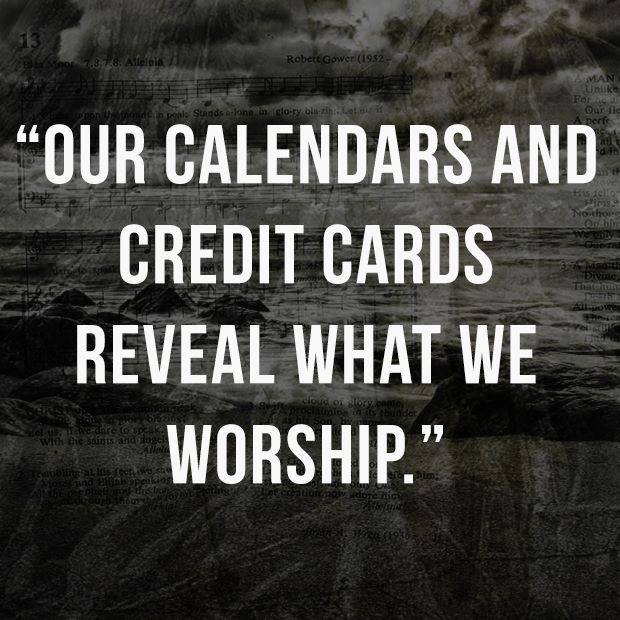
What do I need? There is nothing on earth that I need, except that which is most essential. What do I need, what is most essential? I need the Lord, I need His grace, His kingdom within me. On earth, which is the place of my wanderings, my temporary being, there is nothing that is truly mine, everything belongs to God and is temporal, everything serves my needs temporarily. What do I need? I need true and active Christian love; I need a loving heart which takes compassion on its neighbors; I need joy over their prosperity and well-being, and sorrow over their sorrows and illnesses, their sins, failings, disorders, woes, poverty; I need warm and sincere compassion for all the circumstances of their lives, joy for those who are joyous and tears for those who are in tears. Enough of selfishness, egoism, living only for oneself and acquiring everything only for oneself: riches, pleasures, the glory of this world; enough of spiritual dying instead of living, grieving instead of rejoicing, and carrying within oneself the poison of selfishness, for selfishness is a poison that is continuously poured into our hearts by Satan. O, let me cry out with King David: Whom have I in heaven but Thee? and there is none upon earth that I desire besides Thee. My flesh and my heart fail, but God is the strength of my heart. Grant me, O Lord, true life, dispel the darkness of my passions, disperse their power with Thy strength, for with Thee all things are possible

I Suppose You Like to Play Russian Roulette…

she said as she walked by.

I knew what she meant. She was talking about what others had talked about as well. Going to Africa, 20 hours and a world away by plane, when all the headlines are screaming “Ebola” at the top of their lungs. There was no sense in using logic, talking about the facts, showing people maps. All everyone heard was “Africa” and “Ebola” on the TV and nothing else seemed to matter.

They asked my boss if I was gong to be quarantined when I came back. I understand the consternation, but I’m saddened at how emotion has made everyone afraid of things with which they don’t have to be consumed. There are many countries in Africa but only four at the present have people with Ebola. My destination is more than the length of the United States away from the countries that do, and on and on, facts trying to climb the walls of emotion and take down a castle bit of misinformation. Still, when my plane takes off and heads east there will be questions.

I have my own as well. Will people want to be around me when I return? I’m a Priest and I wonder if people will take the Holy Gifts from me, hug me, or kiss my hand (although I’m not crazy about that anyway)? On my return will there be some magic day when all of it goes away and people feel safe around me even though the country where I am going , Uganda, has no Ebola and the realistic chances of me getting it are winning the lottery slim and my spreading is even longer odds?

Still, I’m going to go.

Some of it is, to be truthful, about the travel and adventure, both things I enjoy. When I was a child I would devour National Geographic and I’ve been around the world many times in my mind. Now its going to happen, for real. I love the diversity of culture and land and people and all the magnificent tapestry of creation and if I was a wealthy man I would probably invest that wealth in little else than taking it all in. There is beauty and grace everywhere because the One who called it into being is the very definition of both.

Yet, there’s more.

You see, the story of Jesus is true. When Jesus came to us God came to live with us, teach us, heal us, bear our sorrows, conquer our fears, overcome our sins, and join us to himself. Somewhere deep inside of me, even when my life wasn’t and isn’t always reflective of this Truth, I still understood and understand that it is real, authentic, and good. Of all the messages, all the claims to truth, all the words that could be spoken, what words would be better than those that tell the story of Jesus and invite people into a living encounter with a God who loves them more than they will ever understand? Not just a matter of duty, it should be our joy to proclaim, in word and deed, this hope for the world, especially in these challenging times. What hardness of heart would keep this most precious reality away from those we love, or, for that matter, anyone who crosses our path? What cause could be greater than to live this life and help people anywhere possible to come to know the Lord of Life?

I have so much to learn, about life, about Faith, about being a Priest. All I can do is go where I can help, listen, and serve. Most of the time all of that will happen right here where I’ve been planted. Some of the time there are things that need to be done in a far away place. Regardless, I’m in God’s hands and whatever else happens the glory is His.


Fort Frances, Ontario…

smells like a paper mill. Which means that it either smells like someone just passed wind next to you or money if you happen to have one of the good jobs at the mill. It costs you six dollars, as well, just to cross a winding bridge through the paper mill to get to the Canadian side of the river from International Falls, Minnesota, on the US side. With the smell and the industrial mishmash of a bridge it makes for one of the least attractive ways to travel from one country to the other that I know.

Yet travel we needed to do because our hope was to make it to Nestor Falls near the Lake of the Woods some time around noon. Already we had snaked north and slightly west through the north woods of Minnesota. Now just one turn left through Fort Frances and a few kilometers, which apparently the locals call kill-oh-meters, and we’d arrive.

We’d done this before, of course, crossing in to Canada. It used to be routine, almost like a joy ride. Show the nice man in the Canadian uniform your driver’s license, tell him you’re not taking booze or guns into his country, and off you go. This time, though, the guy at the other side of the bridge was a young man, surly, with close cropped hair, speech, and apparently an itch somewhere he couldn’t scratch. A little slip of the tongue and out came the attitude. The crime was forgetting to mention we had a ten dollar light fixture we were bringing in to the country for the purpose of, well, replacing a light fixture where we were going. For this lapse of memory we were subject to a scolding about how we should pay attention to the questions and listen the next time we came into Canada. The whole thing seemed like the satisfaction of a little dog barking through the window of its house at passerby.

Yet we were off on our way and soon the miles, I mean the kill-oh-meters, rolled under our tires. In this part of western Ontario there are a few small towns that hug the border with the US and even a hundred miles north finds you in dense, nearly impenetrable, woods. Only a few mining roads provide some access and anglers need to fly into the remote lakes by float plane. Even power, or “hydro” as they call it, only goes so far and an hour north of the border cell phone service is nearly non-existent.

And that’s why, in part, we came.

Nestor Falls and its companion village, Sioux Narrows, hold no more than a thousand souls at the peak of occupancy and many of them simply go south and leave their homes and businesses to the cold in the winter. Mostly people work for the tourists and US dollars are standard currency. The ground is hard, rock with a slim layer of soil for cover, so homes and the necessary plumbing need to be spread out. No one has a basement. Almost everyone owns a boat.

When we arrived at the cabin on Big Pine Lake it was as it had always been, a large lake with one resort and a handful of cabins. The Crown owned the rest of the land and they weren’t in the mood to sell any of it. Trees, eagles, forest covered islands with no human touch, all of it was there as it had been for years. Less than a day from Minneapolis and it felt like the edge of the known world.The cabin had power and flush toilets, even satellite TV, but out there, just at the edge of the sky was wild land, places where you could get lost if you weren’t careful, places where the things you could take for granted elsewhere would be a source of struggle here.

And although we slept with a roof over our heads and a fully functioning bathroom just down the hall, it was good to be near those wild places. I can understand why monks and seekers of truth would shed all the trappings of urbanity and seek God in such environs Not too far from the safety of our cabin were places where simple truths mattered and a kind of wisdom could be obtained in the rigors of surviving in that world. To make a life in such places would require one to be fully alive, fully aware, and constantly surrounded by the immensity of creation and the smallness of humanity. Being even on the edge of it had a spiritual quality, being alive in it may have the quality of living in a temple.

It was too soon before the clock and life and the demands of money and civilization forced us back south again. Home is where the neighbors are close and we are not on the edge of anything, let alone a wild, untamed, and spiritual wilderness. I live here and try as best as possible to seek out God’s face, for He is truly present here as well. Still it was good, surly border agents and paper mill smells included, to be away for a few days on the edge of the forest. There are possibilities out there and possibilities for me as well if I can keep a sense of it within.
For Your Contemplation…

‘The only place where modern man does not like to visit is himself. He cannot hear the silence, he does not want to hear the voice of his conscience. But without knowing yourself you can not know God. Modern man lives in a shadowy world of TV, the media, the Internet, but the greatest reality in the world is the human soul. Inside we can open up the kingdom of heaven; in our heart God wants to be born!”

+Bishop Panteleimon (Shatov), 21st Century Russian Hierarch

Cleaning out books…

today as part of a general cleaning of the house. It truly is good to live with as few possessions as possible yet the thinning out of books is also an exercise in the bittersweet.

I have books from my childhood and they, for the most part, will stay. Far more than books they are physical reminders of my own history and even though I’ve not read some of them for decades I remember their tales and don’t want those memories to slip away.

Yet I’ve changed and the passing of the books from my life reflect that change. Things important to me “then” are not longer so. I’m in the same body but a much different person than I was in the years those books were part of my life. Theology, pastoral care, apologetics, ministry, even literature have been caught up in the swirl of my own evolution. What was necessary then doesn’t seem so necessary now. What was orthodox then is no longer Orthodox now and my bookshelf reflects this.

Part of me, of course, hates to give up any book just on principle. I still have, and probably will always have, a collection of various Bibles rescued from some place or another. I simply don’t know, for sure, how to give such a book a dignified exit. Yet I don’t feel the need, as well, to carry every book from every part of my life along with me for the rest of the journey. Don’t get me wrong. I’m grateful for their presence and have enjoyed the part they played in my life. Yet, even they are not eternal and to get where I need to go I need to lighten my load.

So, goodbye to some of my good friends, the books that have gone with me through this life. You aren’t garbage and your destiny is to be recycled back into paper so you can emerge, if the fates allow, as a book in your next life, someone else’s treasure and memory. I needed you and loved you then, and in a way I always will.  Yet there’s miles to go, for me, and the older I get the less of the physical world I want to carry on my shoulders. Heaven is out there and some day I’ll need to fly.

Perhaps…

when we see all the sadness and struggle in the world we need to ask a very simple but clarifying question. “Where is the voice of God in all of this?”

I think it’s too easy to think apocalyptically about the world we live in because it allows us to give up on everything and hope that we’re going to be lucky enough to hide, or be taken away, from the world. We may even relish the idea that God will settle accounts, vindicate us, and destroy evil and evil doers. It also a ring of truth to it because we do believe, as Christians, that there will be a day when God will establish perfect justice and renew a broken world.

Yet could it also be true that the sin, struggle, and just plain craziness we see in the world  has within it a still small voice that too often gets unheard because we’re focusing on the storm? Could it be, for example, that God is trying to tell us, that the chaos and troubles of the world as we experience it are actually indicators for where we, as the people of God, need to be active and encountering the world? When a person is in pain we ask them where that pain is in order to help them become whole. Could it also be that what we see around us are the cries of a world in pain and we need to listen to them so we know where the hurt is and make healing possible?

Regardless, if we presume that God is the God of history should we not at least not give in to panic as we see the world around us but rather to look to see where God is in all of this? At the least we could learn from St. Peter and realize that if our eye is only on the storm around us, and not on the Master of the wind and the waves, that we will almost certainly sink.