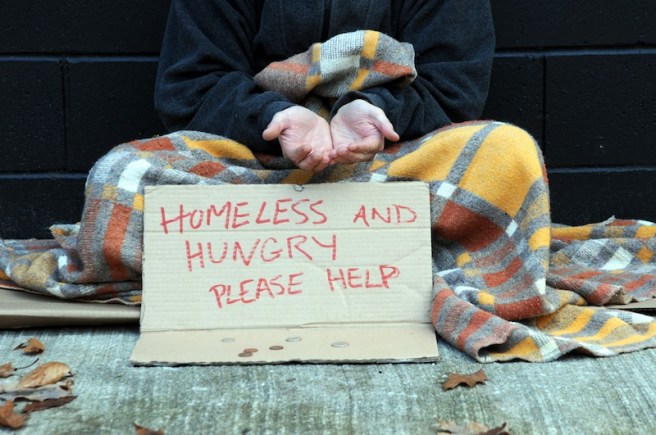
All Earthly Cares…

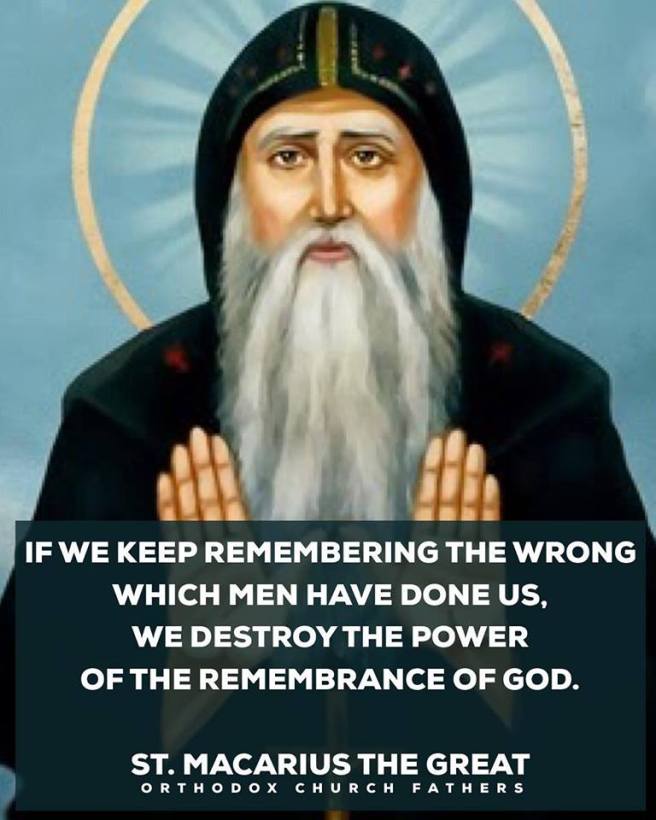
To realize that your cares are earthly, and that they will not and cannot accompany you into eternity is already a revelation. “Dust you are, and to dust you return” the priest will pronounce at your burial. All that is earthly shall remain in the earth. That includes cares you consider so momentous that your entire focus is on them. But like everything on earth, they will change, dry up and disintegrate in time. They are not of paramount importance—salvation is. Let your cares go the way of the world. You are among the people of God reaching upward to be with the Lord in the air. Your soul wants to rise like a helium-filled balloon; but your cares are weighing you down—all around you are ascending, but you are still on the ground. Why is that?

Read more here

The Gift of Being a Sinner

I remember, as a child in my particular sect, wondering why I would still sin and struggle after I was “saved.” There were times when my ponderings brought me to the conclusion I might not be saved, that the various sins I was challenged by were an indication  I was without grace. That can be a terrifying thought and I think more than a few us secretly kept asking Jesus into our hearts on multiple occasions, always seeking a fresh start after we had fallen. Certainly these issues were a driving force behind many, even long term church members, coming down for the  “Altar Calls” that would often close our services when I was a Baptist pastor.

In coming to Orthodox Faith, though,  among the gifts given to me, interestingly enough,  was the gift of being a sinner. I should explain.

It’s not that being a sinner or committing sin is a good thing in and of itself. In truth Orthodoxy has a very high standard for conduct and while, unfortunately, many Christian communities have officially redefined or even sanctioned certain kinds of sin, Orthodoxy still has the basic original list.
pexels-photo-247851.jpeg

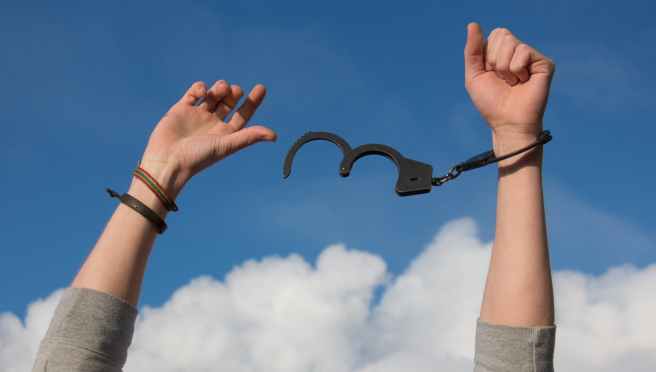
Even while unambiguously maintaining  that list, though, Orthodoxy understands sin and struggle are part of the Christian’s life here on Earth and it freely admits it with no illusions that it could, would, or should be any different. You will fall, you will rise, and you will do it over and over again through all your life. By admitting this freely the Orthodox Faith also doesn’t require us to lie about what we face and who we sometimes are in order to belong and it has no need to redefine sin as a way to soothe a guilty soul. You also need not struggle and spiritually torture yourself trying to maintain an illusion of righteousness while hiding the burden of sin.

You are a sinner, saved, and being saved,  by God’s grace. You are a traveler on a journey towards God and the path will sometimes not be as direct as it should. Despite your highest aspirations you will sometimes, or often, fall short and we’re not about to change the rules to make that challenge any less. Yet, it’s also in realizing this that we can begin the path to becoming better just like knowing what an illness is can often be the first step to recovery.  This is Orthodox Faith.

Along that journey towards God, towards wholeness, towards authenticity the Church, in Christ,  has provided us with gifts, sacraments, graces, and methods of healing that assist us not just in the realization of our status as sinners and strugglers, but also in the healing process. This isn’t a license, of course, to sin but rather a hope that our sins and struggles will not be the final definition of who we are and the realization of being a sinner, far from being a sign that we are without grace, is actually the place where grace comes into our lives with all of its benefits.

And therein lies the gift.



The Orthodox Church…

1614orthodoxchi_00000000993

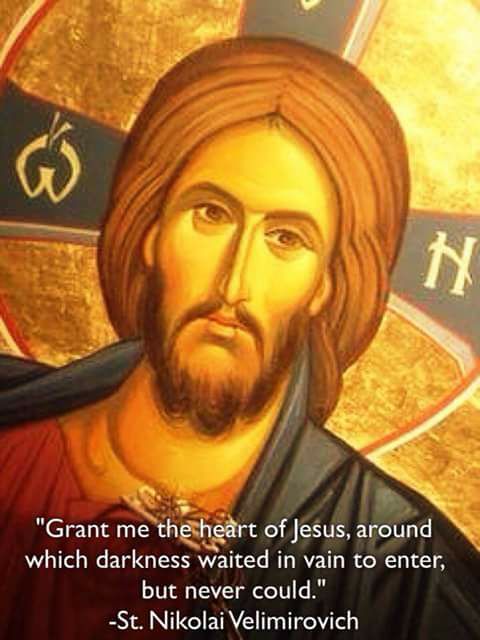
should not be the place where ethnic and racial differences and rivalries are celebrated so much as it should be the place where they are resolved in a new community, a new people, a new nation, a new race, rooted in Christ. In the Church we are not called to baptize the old but to be baptized in order to become new and that newness means that the earthly things that identify us, even if they are pleasant, are not the final definition of who we are either as people or as a Church but rather we are called to be a new nation, a new people, as a way of bearing witness in the present to the world which is to come.

The Words of Christ…

sting sometimes, with an uncanny ability to expose the lies we tell ourselves and penetrate beyond the carefully crafted exteriors of our lives.

aspen-trunks-bw.jpg

Mostly, of course, we don’t wish to be disrupted from comfort, even if that comfort is an illusion and so we resent being exposed, challenged, and corrected, even by someone we would at least theoretically understand to be the Son of God. So we create exceptions, economias, and sometimes just flat out ignore what we don’t want to hear. Perhaps that’s why we sometimes leave the Bible on the shelf, pious in its placement but largely unread. We’re afraid of what we’re going to discover, afraid of what challenge may come our way if we open it and take what Christ says seriously.

Yet the wounds our Lord may give us are not the wounds of an enemy but the wound that a surgeon must necessarily do for the greater healing. Within all of us are spiritual cancers of various kinds, and all of them left unchecked would certainly take not just our lives but our souls as well. They have to go and if we are willing to accept the diagnosis and the treatment we can recover. If we choose to ignore the path of healing then we will lose the very life we think we’re trying to protect.

An enemy will always tell you what you want to hear but a friend will, when necessary, speak the truth even if that truth is troubling, or by our thin skinned society’s obsession with constant affirmation, offensive. When Jesus gets in our faces, despite what we may think at the time, he’s neither angry nor trying to hurt us. Rather, he’s trying to help us find the life we were actually meant to have in a world of illusions so real we often mistake them for fact. There is wisdom if we understand this.


As You Watch…

42265-Ye-Are-The-Light-Of-The-World

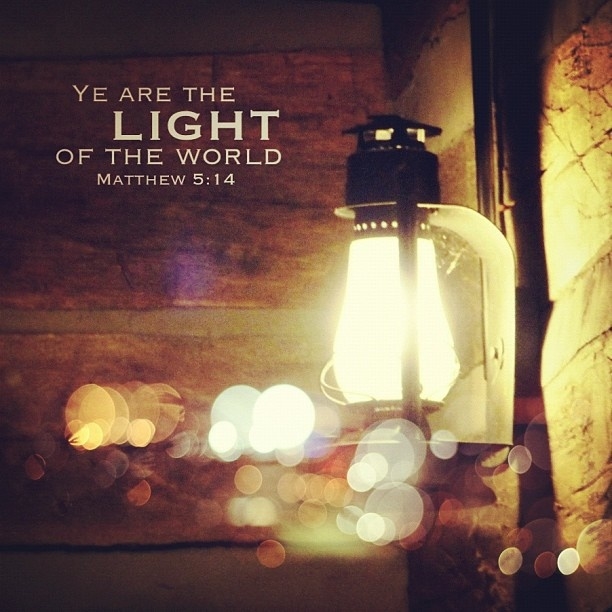
the world darken and twist. As you see the confusion and the breakdown. As you witness the walking dead around you and your heart breaks for what is happening.

Do something. Just that. Do something. it doesn’t have to be a big thing, every little bit counts, but it has something you do to make a difference. Roll up your sleeves, put your faith into action, and seek out whatever you see as wrong and broken and challenged and do something to make it better.

The world and the church are full of passive whiners and complainers, people who have a list of things to gripe about but not a single finger to lift to make things better. Enough of that. From now on anyone who complains about the way things are and does nothing to make it better is part of the problem and needs to be ignored by the people who are actually making a difference. What they say matters nothing until they have shown they are willing to take personal responsibility for making something better.

For followers of Christ this is especially important. We are not called to hide away from the world no matter how terrible that world is. We are called to be salt and light and God’s hands in a place that has made ill by human sin. We are called to proclaim the reality of our faith in word and deed and there are no exceptions, even for difficult days.

Make a decision. Are you in or you? There’s a lot at stake hear not the least of which may be your own soul.

I am learning…

ws_beautiful_path__grass_fields_1920x1200.jpg

there is no perfect place, no perfect job, no perfect church, no perfect life. In everything and everywhere there will be moments of joy and moments of challenge and nothing will ever be just the way you imagined it would be no matter how hard you try.

There’s a kind of disappointment in this. Surely one thing in this existence could be at least close to what you imagine it’s supposed to be. Yet, while some things may come achingly close, nothing will ever be “it”. In fact the closer they come the greater the disappointment when the flaw that mars comes to the surface. Just when you thought you won the prize, the reality of life does something to pull it from your fingers.  It’s, perhaps, one of the most maddening things about being human.

There’s also a freedom, though, in this realization. Accepting there is no perfect anything on this Earth and in this life gives the gift of wisdom, of patience, and a release from the tyranny of perfection into the cool waters of grace. One can be set free to enjoy that which is beautiful and release that which is less so when you realize that a normal life will have parts of both. The good can also become more precious and the harsh can be more temporary when you realize all things pass and see life through this window.

And then there is heaven which seems, as I grow older, to be less like any image I have of it and more like an existence where I can simply “be” as I was meant to be because the presence of God will fulfill all my expectations and heal the imperfections and unrealities of my life. One of the great gifts of getting older is that having seen so much of the world over the years one realizes the quiet ache in your heart on even the best of days is a sign there is more and better and it’s closer than you think. Stepping through that door you realize you’re more at home there than any place your travels in this world may have taken you. Every beauty here is a sign of a greater one to come and every challenge is a reminder of a larger day when all such things will pass.

The Best and Most Challenging…

Open hands beggingquestion any parish can ask is actually rather simple, “Are we doing what Jesus wants us to be doing?”

Now that question should actually be obvious. Surely if we claim to be followers of Christ we should be doing our best to do the actual things that Christ commands. They’re not hard to find, a simple reading of the New Testament will reveal any number of places where Jesus directly tells us what to do and in very basic and simple terms. He also tells us that there will be accountability for our doing, or not doing, the same.

So why not do just that? Why not, for example, when we have parish council meetings start out with a simple question “Are we doing and being what Jesus asks?” and with that as the standard then proceed to seek God’s face for the wisdom and guidance to make what Jesus tells us real in everything we do. Although the implications for many parishes could be profound, the actual process is quite dimple and direct.

Now some would say “But we have all these things we need like keeping the lights on and such…” and all of that is true but what did Jesus say? Jesus said that God knows we have these practical needs and he urges us to seek FIRST the Kingdom of God in the assurance that all the other things we need will be given to us. The truth is we often have things backwards. We seek the things that Jesus says God already knows we need and ignore the things that Jesus tells us will make us the sons and daughters of God.

In the end we’re the ones who lose. Our parish life becomes an endless series of meetings and projects about keeping the building open rather than the Spirit filled adventure of impacting the world and transforming ourselves into what God would have us be. Hands and hearts that God could use for doing great things grow idle or occupied with the trivial and fall into a kind of spiritual listlessness. Faith turns into formalities.

There’s better. There’s more. The question, I suppose, is to what extent we let Jesus be Lord in his own church.