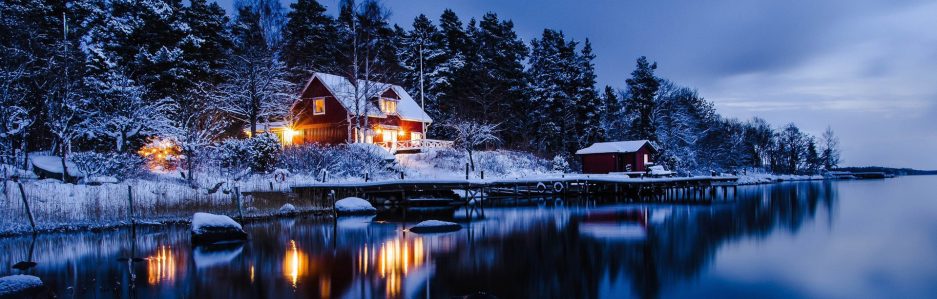
Yesterday was the day after a blizzard and after living in these parts for most of my life I’ve come to appreciate the day after.
Blizzards are part and parcel of life here in the North. Snow falls. The Wind blows. The wise stay home but those who must travel find the normally hospitable roads have grown narrow, uncertain, and drifted with white. In long single lines we crawl to our destinations and keep moving even when we see lights backwards and low on the road, the unmistakable sign of a car in the ditch. Like a herd that keeps moving after the lions have struck the weak we keep driving, (everyone has cell phones now right?) the car smelling of heat, the radio droning on, and a million white dots of snow in the headlights.
But it passes, as all things do. When the weather breaks the world is white and clean, at least for a day, and people emerge from their shelter. From inside the house you hear the scratching of shovels or the puttering of snowblowers. Trucks are on the street and in their glory as they skim through the rutted streets. The condescension of hybrid owners is meaningless today. If you’ve been any kind of decent person at all there will be someone to help you push your car and the grocery stores are full of people with big jackets and funny hats and better than usual attitudes unless they were towed to the city impound.
You see on the day after a blizzard you have to be a neighbor. In the world there are jerks and predators and wierdos and politicians and most of us spend our time just ducking for cover from them all and hoping to keep the noise down. But on the day after a blizzard the good people come out, the friends, the neighbors, the helpers, and the doers and do what they do best, shovel a little more, make sure the older lady next door is okay, share a ride, and look out for each other.
The snow on the day after a blizzard is beautiful but what it can bring out in people is more beautiful still. Would that every day be like the day after a blizzard.
Category: Archival

This weeks' sermon in advance…
January 14th, 2007
Leavetaking of Epiphany
Homily
It was said of the legendary George Halas, owner and coach of the Chicago Bears that he once described football as “22 men desperately in need of rest being watched by 80,000 people desperately in need of exercise…”
In the epistle reading today, and in fact through the whole New Testament and the early church fathers, we are presented with a vision of the church as a unity, a body, and a place where different people, united in a common faith, are given a diversity of gifts by the one Holy Spirit, gifts given to be used for the building up of the faithful and blessing the world. We claim, as Orthodox, that this Church is us, or at least we represent a fullness of this that is not possible outside of us.
So why don’t we look like this?
If these are truly the roots of our Faith how come Orthodox parishes too often look like George Halas’ description of football and too little like the exhortations of St. Paul?
Somewhere along the line we’ve lost something and we see Church as something we go to and ministry as something that Priests do. Neither of them is completely true and both ideas have brought us to the point where we often have a select few people performing in the front for the benefit of those who sit silently in the seats. And that hour and a half is what constitutes “church” for the vast majority of Orthodox.
Is it any wonder that people drift away from the Liturgy because they see it as a service rendered to them and are disappointed when they can get a better show on TV?
Does it suprise anyone that our Orthodox pews are filled with people who are either spritiually frustrated because they feel like they can’t use their faith or those who have just grown cold and silent and accept that deadness as what being an Orthodox Christian is all about.
And why does it seem that so many Orthodox leave the church and find another where, despite their being baptised and chrismated as Orthodox, they feel like they have been “born again”?
We often complain about the ethnic clinginess of Orthodoxy and there is a great deal of truth in that. But we should also be glad because there are times when only ethnic and family obligations, and not the lure of a living relationship with Christ, kept people walking through our doors.
But it was never supposed to be that way.
Yes, Orthodoxy has hierarchy and structure and liturgy and sacrament. The church always has and there was never a golden age of apostolic simplicity where everything just kind of went along with the flow. There’s not way to read the history of the church without seeing that all these structures that are part of our life were there from the beginning. We have more now but they are not different.
But they were given by God not for the purpose of endowing and enriching a caste of professionals to rule the masses and provide necessary services. Instead they were to bear rule and teach and handle sacred things correctly to the end that all the people of God would also be able to exercise their various callings and ministries, their priesthood, in the life of the church and the world.
In return it was understood that the people of God would respond to the teaching and leadership and service of those in authority by seeking to be as fully active, alive, and serving in their faith as possible. No spectators were allowed, all were called to be on the field, playing the game as it were, and seeking to bless each other and the world with all the riches that are found in Christ.
And in a continuation of that it is our Orthodox understanding that this active life of faith, nurtured by sound teaching and the sacramental life of the Church, was never simply a matter of Sunday morning worship. Our Divine Liturgy is most certainly the height of what we do but it is not the extent of what we do. Strengthened by sound teaching and nourished, healed, and forgiven in the sacraments we are to go into the world and be Christians not as a convenience but everywhere, always, and completely. Church never ends at our door, and if it does we are not truly a church no matter how nice our Liturgy is, how beautiful our icons are, or what great kibbeh we can make.
What is needed in our Orthodox churches is not some new fad or program but rather a return to some long forgotten roots of our faith, to an understanding of who are as people of God endowed with spiritual gifts by the Holy Spirit which we are commanded to use for the salvation of our souls and the world.
If you’ve ever asked yourself why you don’t feel fulfilled as a Christian maybe its time to make your faith real, alive, active, and more than Sunday morning. The bottom line is you get what you put into it and too many Christians are missing out on incredible things simply because they’ve been hanging out on the sidelines.
If you’ve ever thought how come churches sometimes turn on themselves and people get nasty just remember that idle hands are the devil’s workshop and people with nothing else to do have a vacuum inside that can be easily filled with dark things.
If sometimes you wonder how the world got to be the way it is stop complaining, light your light and make a difference.
If you think Liturgy has become routine try getting involved, sing where you can, follow the prayers and make them your own. Come expecting to give and discover that in doing so you still receive.
None of what has been said is about condemning you or making you feel guilty. I struggle too but that doesn’t mean what the Apostle Paul said to that church in Ephesus so long ago isn’t true, then or now. There is so much more to this faith, this Christians life and more than anything else I want you to know even a taste of it because if you do you’ll never want anything less again.
When I was a Baptist and it was time to move ahead we used to say “It’s time for us to get off our blessed assurance..”
Is this our time?
Share this:

Moments in time…
It’s annual meeting time again in the Orthodox world, the time to take stock of things, go through the numbers, and plan for the year ahead.
The truth is most Orthodox would rather do a hundred prostrations on broken glass than go to the annual meeting. They can be painful, protracted affairs where every bit of dirty laundry, simmering feelings, and lunacy may surface. People who haven’t given a dime or a moment to the Parish can suddenly show up with “deep concern” over something their slightly more devout cousin or uncle or somebody said was going on. To get out in under two hours is a distinct blessing from heaven.
Part of that, of course is our own fault. We Orthodox have created a church in this country that is hyper-clericalized with lauds poured upon overworked clergy and passive spectators taking it all in like folks at a football game or a show. Into that idle void the devil contructs a workshop and the annual meeting is one place where the spectators feel like they can give their opinions and fulfill their need to matter in a most perverse sort of way.
I do believe if Orthodox people were truly knowledgeable, involved, and growing in their faith 99 percent of our problems would disappear. They would understand by doing and being. They would be learning and growing instead of watching and stewing. They would feel fulfillment in their calling and not be so quick to wreak havoc on the work of others.
We Priests would benefit as well. We could be what we were called to be, a player coach of the team rather than the performer behind the screen. By our teaching and prayers we could help those we care for be the best they can be rather than spend our days smoothing over pathologies (including our own). I have seen both sides of the coin, the hyper individualism and anarchy that marks so much of the life of protestant churches and the lock step hierarchy where a few lead and hope others follow. Both miss the mark.
It’s time for change and a return to balance and the revolution starts when all the people of God turn back to the sources and learn again from our Tradition what it means to be a church.
Share this:

Taint so McGee….
You know that whole story people tell to warn people about ignoring danger, you know the one about a frog who will jump out of a pot of boiling water but won’t if the temperature is increased slowly until its boiling? It’s bunk.
I suppose that makes the sacrifice of the frogs worth it.
That being said it still takes a disturbed mind to even think about casually boiling a live frog.
Share this:

A Catholic thinker deals with abortion…
From Peter Kreeft
Share this:

A little too much exercise…

Started to get back to exercising this past week with the whole herd of lemmings now flooding the health clubs (most if not all, including me, will be gone by July) and decided to do the rowing machine (piece of cake for a kayaker). Well I did a number of my back and every morning I look like the picture above left to right as things stretch out and I begin to walk upright. If I had been so injured due to prostrations then maybe it would have been worth it…
Share this:

Couldn't help but laugh…
As quoted from the Dick Staub www site.
“Outside of a dog, books are a man’s best friend. Inside of a dog, it’s too dark to read.”
Groucho Marx
Share this:

First Things…
I think I need to give up the Drudge Report for a while.
I like the links to various columnists but the whole site is turning in to an online version of the National Enquirer. I suppose that’s what happens when you turn your web site into a business. You have to find and attract customers and so you mix up a little hard news with a little wierd stuff to make it happen.
It’s sad but true. Being a journalist in the major or mainstream media doesn’t mean you’re any brighter or more enlightened than others (although sometimes they like to think so). It basically means you look good for whatever group the consultants say must be attracted and can read well. But actual expertise is not necessarily required. This is very true in religion coverage where reporters with college degrees and time and money on their hands still consistently make errors of the most basic kind.
Many bloggers are actual experts in a particular field or have an ability to gather information and learn that puts the make up encrusted TV types to shame. The big guys like to derisively paint a picture of some of the these folks as sitting in rooms with the shades drawn in paranoid delusion hammering out feverish column inches wearing tin foil hats. But often that’s just about fear of not being the great OZ of information pulling levers behind the scene to inform the hapless masses. For years no one caiught the condescension that dripped down on us every time Walter Cronkite closed his newscast with “And that’s the way it is…” because there were no alternatives. Now there are and OZ is not happy especially when people expose them clumsily trying to manipulate reality in a way they routinely took for granted in the years past.
So the www and blogs are a form of media democracy where voices that don’t fit the narrow vision of larger, more established, media (or state controlled media) are made available to the public. The lady on the TV is now only as important a transmitter of news as she can prove herself to be and it may be that the voice of some person in a far away land actually has something more important to say and now finally has a chance.
The problem, of course, is that there really are people wearing tin foil hats typing out feverish column inches out there and active on the web. And people with axes to grind, deviancies to advance, or just snake oil salesmen out to make a buck are lurking in the hidden corners of the internet. Their very anonymity allows them to purge themselves in a public sphere with little consequence.
So reader beware! You may think something is the way it is rooted only in how it plays on Google without remembering that Google can be manipulated by the skilled for their own ends. Behind that nice page layout can be a person barking mad or just trying to make you panic for their own ends.
When I started this blog I had a purpose. Tired of the endless reporting of scandals, the half truths, the revenge seekers, the manipulators and the just plain wierd I thought it might be nice to have a blog that pointed to solutions other than the usual “give me money or power and everything will be alright.” I believed then and still do that the core answer to the human dilemma is a matter of basic alignment. Human beings, myself included, have aligned their lives to things that cannot heal, cannot make whole, and cannot satisfy. We need a teacher to help us, a savior to rescue us, and hope to enlighten us and all can be found in Jesus Christ.
I’ve never been under the illusion that the Church, or more specifically the people within Her, have always been the best, the brightest, or lived Her greatest ideals. I haven’t and the older I get the more I see how hard it can be sometimes to live the Christian faith. But that being said the ideals still matter, they’re still worth the struggle, they still are the hope of the world. When I stand before people and serve the Liturgy or preach the Word I stand not as some perfect example of my own teaching but as someone who has fallen often yet still believes and tries to transcend my own limited understandings of things by seeking the life that is found in Christ.
If you see this in my blog I’m doing my job.
Share this:

This week's sermon in advance…
January 7th, 2007
The Synaxis of St. John the Forerunner
Homily
This Sunday marks the feast day, the synaxis of St. John the Forerunner, the last of the Old Testament prophets and the bridge from the old covenant to the new.
For Orthodox Christians the word “synaxis” simply refers to a gathering together of a group of people or the people of God gathered for liturgy. Thus we will have a synaxis of saints where a group such as the Saints of America or a group of martyrs are venerated together or a special day, like today, when the people of God gather together to collectively venerate a Saint.
Today we call to mind St. John the Forerunner, popularly known in the west as John the Baptist although he has no specific connection as founder or theologian to the group of Christians who identify themselves as “Baptists”. He is also not to be confused with St. John the Apostle.
He was, instead, a prophet identified by Jesus in Matthew 11 as the greatest human born of woman and the person who embodied the spirit and ministry of St. Elias thus confirming the word of the angel recorded in Luke chapter 1 who appeared to Zacharias while he served in the temple and predicted the future ministry of his yet unborn son; the announcement of the arrival of the Messiah as predicted by the prophet Malachi.
St. John may have been a Nazarite all of his life. The first chapter of the Gospel of St. Luke records that the angel Gabriel who announced his mission also said he was not to touch anything made of grapes, which was one of the ascetic practices required of those took the vow of purity and dedication to God as found in the book of Numbers that identified one as a Nazarite. In addition Nazarites did not cut their hair or touch the dead. After St. John the most famous Nazarite of the Bible was Samson, the judge of Israel and legendary strongman.
St. John’s family was Priestly and his birth was, like Samuel’s, the product of a supernatural intervention by God as his mother Elizabeth was past the normal childbearing years. As the words used to identify family members in the New Testament do not have the same precision as those we use we are certain that St. John was related to Jesus through Zacharias and Elizabeth’s family ties to Mary but we are not sure of the precise details. It is likely that St. John and our Lord were cousins.
At some point in his life St. John left his family and went to the wilderness where he urged people to repent of their sins and be baptized to purify themselves in anticipation of Christ’s return. We know he had wide influence and was known not simply by the people but by the religious leaders of his time and the political rulers, especially Herod Antipas, the son of Herod the Great who feared his condemnation of his illegal marriage even as he respected his prophetic ministry. St. John also had disciples including St. Andrew and some even thought he was the Messiah although St. John vigorously denied it.
After the baptism of Christ, which we celebrated on Theophany, St. John’s ministry begins to fade away. Numbers of his disciples begin to follow Jesus and in the final year of Jesus ministry St. John is jailed and then executed. The man who was born six months before Jesus, his task being fulfilled, dies, according to some traditions, six months before our Lord’s crucifixion. His small group of disciples take away his remains and bury them. Various Christian groups and even followers of Islam claim to have relics of the Saint in their possession.
The details, though, of his life are significant only to the extent they capture the spirit and the life long focus of St. John. He himself understood his mission when he said of himself in respect to Jesus “He must increase and I must decrease…” In that he shows the deep desire of his heart for Christ and a profound sense of humility which allowed him to lay aside his own renown.
The life of St. John the Forerunner also reminds us of one of the central teachings of our Orthodox faith, namely that our lives are supposed to be in a continual process of being transformed with a goal of being so filled with Christ that the line of separation between Our Lord and us grows smaller with each passing day.
Like St. John the Forerunner we must decrease and Christ must increase. In an age where self-fulfillment is the be all and end all of existence this call to die to ourselves and live for God is starkly countercultural and often places us at a radical discontinuity with the world around us. Yet it’s also the source of human fulfillment at its deepest and most basic level.
Every day a new thing comes into our world promising to fulfill the need we have inside and very few of us ever get the irony that whatever else this new thing is it is most certainly the replacement for the last thing that made the same claim and failed, an endless line of broken whatevers extending back to the dawn of human history and the first piece of forbidden fruit which promised much but left the bitter taste of death in our mouths.
The whole world has the jaded, tired, look of a race that’s “been there done that” and still finds itself hungry and thirsty and needy and broken at its very core. Yet as hard as it may be sometimes to swim against the current the secret is still the same “He must increase and I must decrease…”
We struggle with this, of course, because we fear the end of ourselves even as we wish for something better. But as in our prayers, our worship, our acts of mercy, love, and justice we take small steps towards the light we also begin to understand in some small way that the reality of Christ in us is what makes us most alive, most real, and most human in the best sense of the word.
The world has changed in many ways since St. John, looking rough, ready, and very prophetic wandered the hills of the Holy Land. But that truth remains. Jesus must increase. I must decrease. And as this happens I will know life beyond the illusions of this world.
Share this:

Just a reminder…
Just a reminder.
Pat Robertson doesn’t speak for Orthodox Christians, in fact he doesn’t speak for the majority of Christians of any kind. Some in the media like him for the same reason they like car wrecks and so his public pronouncements on his alleged conversations with God about this and that make it into the news.
If they’d bothered to actually ply their craft and do a little leg work they would have discovered that Pat Robertson’s views reflect a tiny and shrinking sliver of Christian thought in this country and most of us just cringe when we hear him talk or take on the same attitude of polite understanding we’d use when granpa farts really loud in the living room.
Enough said.

 The Beautiful Path