
Inflatable Orthodox Chapel. The applications for mission work could be potentially far reaching. Temporary Orthodox structures for hard to reach places. H/T Monomakhos
Author: Fr. John Chagnon

Since Childhood…
my mind has been filled with many thoughts from the sublime to the ridiculous and often more than one at a time. There is a beauty and creativity to it and a frustration as well. It’s also why I truly enjoy the focus of performing music live, of sharing homilies, and of serving at the Altar. In each of those there’s a need to be in the moment as completely as possible and when that happens there is for me both great challenge and a great peace. Someday, presuming that heaven is my lot (and for this I trust God and not myself) I believe that one of the greatest joys of it will be having only one thought, that being God. That for me will be a most sublime rest.
Share this:

The Tree is Set and Lit…
in white as the darkness falls over St. Paul, Minnesota. It’s been a rainy day, warmer than usual and the ground is still soft without a blanket of snow. There’s a warmth in the house, a warmth of electric lights, an occasional burst from the furnace, and the sense of being in the same comfortable place where you’ve spent more than twenty years.
In these days preceding Christmas there is both a kind of busy rush and moments of quiet that dance with each other throughout the day. In the quiet moments I’m visited, like clockwork, by people and memories from the distant pass. Friends from school. People I’ve loved who’ve gone to be with God. Moments in time and memories of Christmas past. Each is a little pause in the rush of time. Each is a little gift. Each becomes very special and present and alive this time of year like welcome visitors from a long journey.
I hope the friends who have walked with me for whatever time are being blessed in this season. I hope they have food enough, warmth enough, and people who love them in abundance. I pray that those who are with God have found the promised rest and never grow in that place where time means nothing in the light of eternity. I hold on to the memories as a kind of nourishment, food for the journey home.
And now my mind wanders back to my grandmother, my mother’s mother and the only grandmother I ever knew. I remember her kind face, the house she shared with my grandfather, and the gifts that would make their way north like clockwork about this time of year.
They were slippers, hand knit and always just the right size. They came from Florida or later Arkansas where my grandparents spent the winter. I don’t necessarily remember the colors but they were always done with a kind of art that only comes from a person who really knows how, and likes, to knit. One pair each, and all of us boys got them every year. They were warm and most of all they were great for getting a running start and sliding across any smooth surface. Mostly I think we wore them out about spring time and so we needed new every Christmas. More than just something to wear they were a kind of reminder that we had people out there, far away, thinking about us and sending something special, something they made themselves, as a reminder.
My grandmother died in 1982. Has it really been that long? Sometimes when people ask me to share a favorite memory of the Christmas season I remember and talk about those slippers and how much I miss her and how much I wish I could get just one more pair for Christmas. There’s a sadness to that, but a joy as well because when I recall it’s if as the years have vanished and I am somewhere back there and we are not that far apart after all.
And there is peace.
Share this:

Sometimes I Cry…
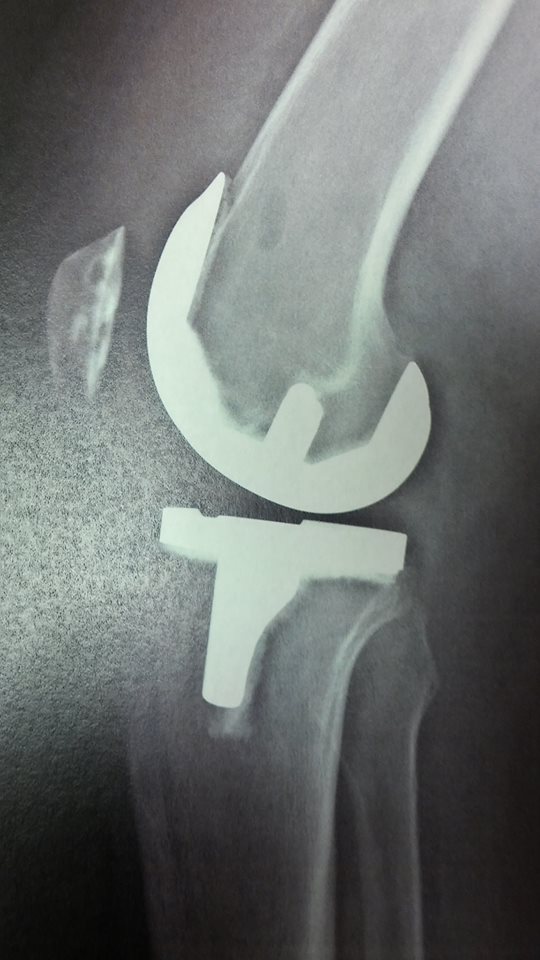
because the leg is so uncomfortable. The knee is new but to place it there muscles had to be stretched well beyond the range of comfort, muscles now telling me with pain about what happened when I was under anesthesia.Sleep is hard to come by because just when you find a comfortable spot your leg reminds you of what occurred a little over two weeks ago. I sit in the house, a lot. I hobble up around the block with a cane just to keep things moving. It gets better, but often so slowly that it’s hard to notice. I wonder why I signed up for this sometimes.
Yet, at the same time I’ve had moments when I’ve been buoyed by the knowledge that people are praying for me. I have people caring for me who have been gracious and kind. I am being humbled by not being strong and yet learning so much about the grace that comes in weakness. I’ve cared for people all my life and now I have to learn about how to be cared for, a humbling and challenging thing for a person who’s pride was often too much about being strong, capable, and in control.I simply cannot be strong for anyone but myself these days and anything I have is grace because my body is still far from recovered by the short term damage done for my long term healing. I must wait. I must be patient. I must be many things that are hard for me so I can be better.
Little things are so much more important now. A few minutes outside in the sun. Little acts of kindness seem like amazing gifts. My wife helping me get on my socks. The cat sitting on my lap. The autumn trees outside my living room window. Even the shortest trip in a car. I wish I could do so much more, and sometimes tears of frustration well up in me but I’m coming to understand things about God and myself that I perhaps could have never learned otherwise.
In time I will be better. The knee that feels swollen and painful will give way to way to one that works so that I walk and be free of pain. A little while longer, one hour, one day, one week or however but it will come. Until then, in my own way, I am God’s wheat.
Share this:

It’s in the Book…
and that’s part of the reason we Orthodox Christians call Mary the Theotokos (God bearer) and venerate her.
The Reading is from Luke 1:39-49, 56
In those days, Mary arose and went with haste into the hill country, to a city of Judah, and she entered the house of Zacharias and greeted Elizabeth. And when Elizabeth heard the greeting of Mary, the babe leaped in her womb; and Elizabeth was filled with the Holy Spirit and she exclaimed with a loud cry, “Blessed are you among women, and blessed is the fruit of your womb! And why is this granted me, that the mother of my Lord should come to me? For behold, when the voice of your greeting came to my ears, the babe in my womb leaped for joy. And blessed is she who believed that there would be a fulfillment of what was spoken to her from the Lord.”
And Mary said, “My soul magnifies the Lord, and my spirit rejoices in God my Savior, for he has regarded the low estate of his handmaiden. For behold, henceforth all generations will call me blessed; for he who is mighty has done great things for me, and holy is his name.” And Mary remained with her about three months, an d returned to her home.
Share this:

I’ve played music…
from a least the time I was in elementary school and even performed from time to time since then. Piano, violin, mandolin, guitar, bass, ukulele, vocals, all of them at one time or another were part of my musical life. Music was always just there, inside, outside, in my head, and flowing through my life.
In the lean years, especially during high school, it was my comfort in those uncomfortable times when I hid in the band room and played piano instead of facing where and whom to sit with during lunch. Out there was a place where I didn’t really belong, in the room with the piano I was safe.
College came and the music took a back seat for a bit but then after seminary in those painful first years of ministry it came back again, an old friend come to comfort me as my prayers flowed through my fingertips in song. From then it has never left and in my early 30’s I encountered the instrument that changed everything.
I had always wanted to be in the band but for the sake of shyness, the fear of other’s ridicule, or the people in my life mentioning the sheer impracticality of it all, such things never seemed to happen. I would play for small groups and at church but mostly it was about me alone with everything from the inside finding an outside with my songs. At a friend’s urging I borrowed the money and purchased my first bass, a black and white Fender Jazz and a small amp actually made for a guitar.
It took a while to teach my fingers to find the spots but they did and then the spirit of the instrument began to capture me. I began to love its sound and its place, the rhythm, the solidity that only bass notes can provide, and it opened up doors. The time for being a virtuoso guitarist had, perhaps, passed but there was always a need for a bass and I had one. I could be in the band even if it was for playing the instrument no one wanted to play but everyone needed.
And out I went, first playing by myself and trying not to irritate my wife or frighten the cats, then on to the local jams, and from there into small groups. I still recall the almost dreamlike sense of realizing that here I was on a real stage making music with real people and what I had too often enjoyed alone was being shared. It’s an addicting thing, really, and I can see why famous musicians, when they are not on the stage, could contemplate drugs to replace those short two or three hours when there is nothing better than making live music.
The instrument became a part of me and I could slap, or pluck, or tap, or mute, whatever I needed and sometimes, because it was a bass, I could just thunder to the point where the motion of the music was like a second heart beat. Perhaps it was the instrument that no one else wanted to play but there were, and still are, times when I don’t just play but feel the music and it’s everything to me in that moment.
Yet, being a bassist also means you need other people in ways that some musicians don’t. Bass is a team instrument, vital to the group but very alone without it. On the stage it’s a glorious rumble, in the quiet of the practice space it can be notes without the larger context. And did I mention that people, especially musicians (myself included) can sometimes be very quirky. One band fell apart because the guitarist lost the use of his hands. In another someone, and I think it was after being overwhelmed by seeing the inside of my church, decided I was wasn’t a good “fit” in his evangelical band and off I went. In between there were tryouts, tryouts that were masked as jams, and moments where there was promise and then promise found a way to be dashed.
I understand. The life of a Priest is very different from the life of a musician. I couldn’t always make the kind of promises that are the mark of being in a band like Wednesdays and Fridays in Lent and all the potential time changing emergencies and fluidities that happen when you work in the Church. For some, too, there is just something about the “vibe” of having a Priest in the band and, again, I get that. Sometimes that means I feel alone and outside even if I know that I could knock it out of the park with the right bunch of folks. But the truth is that I would try, even if I weren’t a Priest, to live this Christian life as best as a sinful person can and Jesus would always come first even if I never wore a collar. I owe Jesus that much, at least, for all the grace, forgiveness, and mercy that comes to me daily from His hand and, in the end, it is before Him, and no band or record company, that I will stand.
So I juggle my life with that in mind. God first, family second, music third. Some day, of course, I’d like to be in an ongoing and vital band. There’s nothing like it. Until then I pick up a jam when my schedule allows, perform as a solo on the uke when the opportunity presents itself, and share my music with the Seniors who live where I work. Every so often the longing, and I have to admit this, for the limelight beckons and a certain sadness sets in thinking about what could, should, or might have been. Still, there’s a different kind of light that calls out to me. Long after the lights on stage have gone out this Light will remain and there is nothing that can extinguish it so I choose to be wherever it shines and let everything else fall where it may.
Share this:

As I Limp…
from place to place, not in agony but rather with the kind of nagging awareness of the disintegration of my right knee over the past few years, there are times when I wish I could be one of those fortunate souls that is miraculously healed.
I imagine standing at the Liturgy or in some moment of prayer and feeling something change, a warmth maybe or some kind of sign and then feeling the pain disappear with the later befuddled confirmation of my doctor via MRI. I know it can happen. I believe it can happen. There’s still time before my operation in October for it to happen. Yet, it hasn’t happened.
It’s not that I haven’t thought of bargaining with God or one of the Saints about this. I have. It’s also not that the whole thing hasn’t been frustrating at times. It has. I’ve had doctors shove needles deep into my knee with chemicals they hoped would help. I’ve had moments when I felt the whole thing on the verge of giving way. Sometimes its even hard to find a way to hold my legs in place to sleep. If there was a test to see how much ibuprofen was in my blood I’d be interested in seeing the results. How wonderful it would be, I think at times, if one day, one moment, God would grant the mercy of a miraculous healing to me and I wouldn’t have to face surgery, weeks of rehab, and the realization that in 10 or 15 years I may have to do it all over again when the replacement needs replacing.
Still, I have no intention of cursing God and dying. My osteoarthritic knee is a reminder of my own aging and mortality and I need that from time to time to help sort out the really important things from the junk. My bum knee has also made me much more aware of the reality of life for many of the Seniors I serve in my “day job.” It’s one thing to theorize about their pain and challenges and it’s quite another to have a little direct experience. It’s also a great reminder to try to stay in some kind of reasonable shape if, for nothing else, to just be able to walk.
Still, I miss dancing and I don’t like being weak from time to time. I regret not making better use of those days when all was well. Sometimes, it just stinks for no reason in particular and my patience with the whole thing can quickly wear thin. As the date for surgery looms closer and I’m really not looking forward to those days when I’ll need to force myself into therapy and be stuck at home while the rest of the world goes by.
So yes, I suppose there is still time for a miracle. Yet God will also be with me in all the times ahead, a presence I don’t deserve yet one freely given to me out of a love beyond my depth and that, in itself, is a miracle I’m already experiencing whether or nor the unction “takes” in the way I had hoped.
Share this:

A Few Days Ago…
I read an article in the news that estimated around 44 percent of American homes had a firearm. I suppose I shouldn’t be surprised, one of the fastest growing industries of the past decade or so has been the firearms trade. We Americans have purchased a lot of guns in a short time and I’ve seen estimates of somewhere over 200 million firearms of all kinds in our country.
Now here’s where you’d expect the usual anti-gun screed to start but I’m not going to give it to you. I grew up in a household with firearms. I know what they can do and how to use them, and I know that the vast majority of people who own them are law abiding and have no intention at all of doing horrible things.
Yet a part of me is sad and troubled as well about it all because I know that for more than a few of those people who are in the sporting goods stores lining up to purchase firearms there is also a sense that things aren’t right and it may be a good time to hope for the best but prepare for the worst. I’m not talking about hard core “prepper” types with food for a few years and a thousand rounds of ammo in the basement. They exist but they are still few and far between. Instead I see, better yet I feel, a kind of social unease where regular folks are contemplating the world they see around them, the culture they are experiencing, and quietly thinking about how to protect themselves and the ones they love if the usual things that hold us together start falling apart.
These are mostly regular folks, people with the kind of usual lives that form the core of any stable society. They are members of our churches, the people we do business with, folks from all kinds of routine walks of life who are pondering and wondering and then quietly find their way to the counters of the sporting goods stores with a combination of reserve and resolve and thoughts about the “what ifs” where their lives could be changed in an instant if the things they see on TV stop being someone else’s problem and start becoming theirs.
Fortunately the odds are still in their favor, for now. The vast majority of them, and us, will not, and perhaps never, be the victims of violence. Yet, at the same time I know the unease because I feel it too. Could my neighborhood, my city, with its very eclectic groups of people, one day break out into chaos? The answer is simple, “Yes.” Could the bonds that have held us together over the years in relative peace come suddenly unglued? Indeed they could because sin and brokenness and evil are part of the human condition, part of even the best of us, and insanity can quickly descend when the things that make for community are undone and it becomes everyone for themselves.
So you won’t get any argument from me about people trying to think about an end game if the worst should become real. There’s a wisdom in that and as long as it doesn’t descend into a kind of paranoia and, in doing so, actually create fires where none were started it might actually be helpful to keep the peace. Yet there is also a need for a greater wisdom in these days, a wisdom that transcends time and calls us to a way of life that is larger than any moment.
The unease we can feel. The sense of protection and peace we desire but cannot always find. The realization that things are not as we would like them to be and that there is potential for even worse, are illnesses of the soul that no law can cure. The political class often sees laws as an answer in the same way as a person who has only a hammer sees everything as a nail. Yet something larger beckons. The sicknesses of the soul can only, and ultimately, be healed by God alone. The farther we drift away from God the more perilous our journey becomes and our rest is found as we seek and find God. As we draw closer to God the result, in the Christian sense of that drawing closer, is also to bind us to each other and bring down the walls between us, walls sometimes bristling with gun barrels, and even if we cannot always agree on the details we can at least begin to see the “others” in our lives as humans and that’s a good start.
Yes, there is a kind of wisdom in reasonably preparing for the worst. Yet the greater wisdom, even while doing that, is to hope and work for the better. Without that second and greater wisdom we might all find ourselves living in a culture marked by tribalism and violence without meaning. If the light of that greater wisdom is allowed to flourish we at least have a chance.
Share this:

Tomorrow…
marks the 11th anniversary of my ordination as Priest in the Orthodox Church but there’s more to the story. I was first ordained as a Baptist pastor in 1989 so, in fact, I’ve been in ordained parish or chaplaincy service for over a quarter century and what a long and interesting trip it’s been!
I remember those days late in my last year of seminary, contemplating the future as a fresh, new, and young minister. I had hoped to do good things, many even great ones, through the best way I knew how namely the Gospel, the good news of Jesus. I had studied. I had tested. I had taken psychological tests. I passed the various boards and gatekeepers. I had arrived.
Two parishes followed in reasonably quick succession, parishes with good people but also malignant and vocal minorities who really did plan and scheme and attack and make life miserable. I remember being curled up in a ball deep in my tears in the hall of the parsonage of the church in Kansas that had just fired me without even a clue or a specific reason that I could recall. Somebody somewhere didn’t like me and they had the votes. Everything naive left in me died in those days as we packed our stuff and made plans to head back to Minnesota. All I knew was that I wanted to leave that little town and never go back to a Baptist church, ever, and writing about this even now hurts a bit.
Yet the hurt of those days led me home to Minnesota, older than my years and much wiser through pain. I found a “day job” and then a chaplaincy position in the environment where I started my working life, the nursing home. My studies, too, had taken me far from where I had been. I left the American Baptist Churches, became an Episcopalian, and briefly considered holy orders in the Episcopal Church. I knew then, though, that this community had already gone too far too fast from everything it had cherished and there would be no home for me there.
Instead I discovered in a magazine about a new movement called the Charismatic Episcopal Church, a group of evangelicals and charismatics who had embraced Liturgy and their understanding of the ancient Christian Faith through an Anglican ethos. There were trips to Kansas City to visit the Bishop and, in time, I was ordained Priest and sent back to Minnesota to plant a church. While this was happening I came in greater contact with Eastern Orthodoxy and began to explore its life and ethos. In that time of discovery my heart began to become Orthodox and when I, and then we in our tiny mission, discovered the Western Rite we made the plans to change. Our hope had been to continue our little community as a Western Rite Orthodox Mission (Up here in Minnesota where about 80 percent of everyone who claims a Christian title is either Catholic of Lutheran there is still great potential for such a thing).
Yet it was not to be. Our mission was fervent but larger things were at play and, in time, we chose to leave the mission behind and become part of St. George Orthodox Church. I was eventually ordained Deacon and then two years later Priest and sent to St. Elias Orthodox Church in LaCrosse, Wisconsin. The parish was full of good people but needed money for repairs and the necessities of life so, over the years, I served bivocationally, living in St. Paul and traveling to Wisconsin on weekends. It was good work but the travel and the time left me exhausted and my feeling was to move on and let someone else build on a better foundation so I could rest.
My hope was that I would take a sabbatical year and then be picked up in the “draft” my term for the assignment of Priests that usually happens in the early summer. It never, for reasons I still don’t know, happened. Six years from St. Elias I am still in St. Paul, attached to St. George in West St. Paul, and in a mobile ministry of helping parishes in transition while I work my day job. I am a circuit rider of sorts but instead of a horse I have a Nissan and while the Apostle Paul made tents to keep a roof over his head I plan programs for Seniors in an Assisted Living.
I still dream of planting a church here in Minnesota. There is a great potential for this area but, at the present, the will is just not here. This dream, and its deferment, have been a constant in my heart and while I understand that it was not possible while I was in transition to Orthodoxy I may never understand why the dream has been given but its fulfillment has been rendered impossible to date. I still believe in Jesus, as well, even though there have been times when the people I trusted to care for me have provided plenty of evidence to the contrary. There is sin in me and sin in the Church and I’ve tried to be wise and forbearing in it all. Sadly, I’ve also learned through hard experience to be careful with my trust. They say “Once bitten twice shy” and there is some real pastoral wisdom in that phrase. A Pastor without an escape plan when things get hard places themselves in a very vulnerable place so have a solid amount of cash in the bank if a church board or Bishop changes their mind. If I would say anything to current seminarians it would be to love everyone but also be wise because some of the people you love won’t even try to return the favor.
It’s also been a great privilege to serve and help people which is part of the reason I got into the “business” in the first place. A good Priest can make a significant difference in people’s lives, a difference for the good. While pastoral ministry can be painful there are also many moments of joy, of the true satisfaction that comes from making a positive difference, and those moments are the fuel that keeps that original spark burning. For every hurt there are many more happy moments and when I doubt that I simply look back through my file of cards and letters and pictures to remember everything, good and bad, in its proper context.
Right or wrong, sinful or forgiven, at my best or worst, I’ve never lost the awe of serving at the altar and I suppose that if there is anything that could be salvaged from these years it would be just that. There have been moments, of course, when I just wanted to quit, to retreat from the battle and rest for a while. Somehow I always find my way back which either means I’m crazy or called. I’ve also never stopped believing in Christ, although sometimes that belief has come through tears or clenched teeth. Nothing that’s happened to me, good or bad, as a Priest and Pastor has changed my belief that Jesus is exactly who he and his Church claim he is and, because of that, everything he is and says is of the utmost importance.
As the 11th year comes and goes the truth is I have no idea what is going to happen or where this long, strange, trip will take my wife and I. Sometimes I wish I did but that seems to be about me learning the lessons of trust. There are things I would change, of course, like never moving to Kansas, but for the most part its been good and for that goodness the glory goes to the God who has enough of a sense of humor and even more of grace to let me ordained not once, but three times (Baptist, Anglican, and Orthodox) as a tender of his flock.
Share this:

I was 17…
when I had my first encounter with death, not the movie or funeral home kind of death but the real thing as in a person without breath, without color, their mouth frozen open as they were when their soul left the body. That was my job in high school, a nursing assistant, and while others my age were figuring out how to ask someone to a date I was learning how to properly clean and present the dead while we waited for the funeral home.
In my early years in ministry death was there as well. The call in the night. The bedside vigil. Watching, praying, trying to think of something that would help as the person moved from this life to the next. Mostly peaceful, sometimes violent, always in the understanding that sometime profound had happened, perhaps the most profound thing of all.
The sad truth is that I don’t even remember all of them, the bodies I washed, the vigils I kept, the funerals I’ve done. The traumatic ones have stayed. Those I watched over who were close to me remain. Others, sadly, have been lost to time and only remain in God’s memory. Each has left their mark. The first was an older lady well into her dementia. The most violent was a man who died in front of me as he coughed up his lungs into a towel I was holding because it happened so suddenly we couldn’t even get him to bed. The saddest were the man who I watched die in the middle of DT’s in his middle 40’s and the old man I sat with in the Kansas nursing home who had suffered his whole life with both mental illness and the tragic stigma that it came with in those days. Lately, even though I work with Seniors and people who are dealing with sometimes chronic illness, I’ve largely been spared yet the memories remain because once you see death up close and for real everything changes.
Death is hardly ever like the old movies where a person sort of tips their head to one side, after a few last words, and then look like they go to sleep. Death is sometimes traumatic, violent, and bloody, where the life, by virtue of that trauma, is forcibly removed. Death from illness can be long and drawn out, sometimes taking years as the life slowly trickles out from the one who is sick. The body grows weaker and simply can no longer sustain itself. Sometimes death comes quickly with the first and last signs of its arrival only minutes apart. There are as many ways, and combinations of ways, for people to die as there are people and so even if the causes are identical the actual dying may never be.
Death strikes fear in us. Death is the ultimate threat. Yet death is not without its wisdom and the discerning can learn from it if they’re willing to spend the time contemplating it. As people get older, of course, they do this simply by looking in the mirror but one does not have to wait for the obvious signs of their mortality staring back at them to begin to get the larger picture.
You will die and so will I. Outside the intervention of God every single human being will die. It may be sooner, it may be later, but the fight for life will end and you will lose, at least in the short term. I remember seeing a tee shirt that said “Eat right, exercise, die anyways” and that shirt is 100 percent correct. A thought like that can make one morbid, obsessively introspective, and prone to despair because there is truth to it. Life really is short, often troubled, and eventually ends. Or it can set you free if take it just one step further and realize that since life really can be short, often troubled, and does end, there are so many things you think are important, things you’ve been told or tell yourself, that just simply, in the bigger picture, aren’t. As you come to realize this they lose their power over you, they lose the ability to compel and imprison you. It really is true, you can’t take it with you, so why get too upset if you don’t have it now and if you do have it why tie yourself to the chase of getting more instead of sharing? Death will take everything from you that doesn’t truly matter, that’s not eternal, but everything that matters is both good in this life and remains.
The Psalmist asked God to teach him to number his days so he could increase in wisdom. In Orthodoxy we talk about this as the contemplation of our own death not as a morbid thought rooted in brokenness and despair but rather as that which can, properly understood, be the wings we’ve always wanted to fly high and clear from the sad, broken, gravity of the world as it is. The wisest of people live life as if they are dying because, quite frankly, they are, but they do this not as simple thrill seekers trying to pack in as much “life” before the end but rather as souls who realize where, and in Whom, life in its fullness actually occurs and, that in finding that eternal “more” they find life here as well.

 The Beautiful Path